






















Voters in Hong Kong reject the "patriots only" election, resulting in historically low turnout

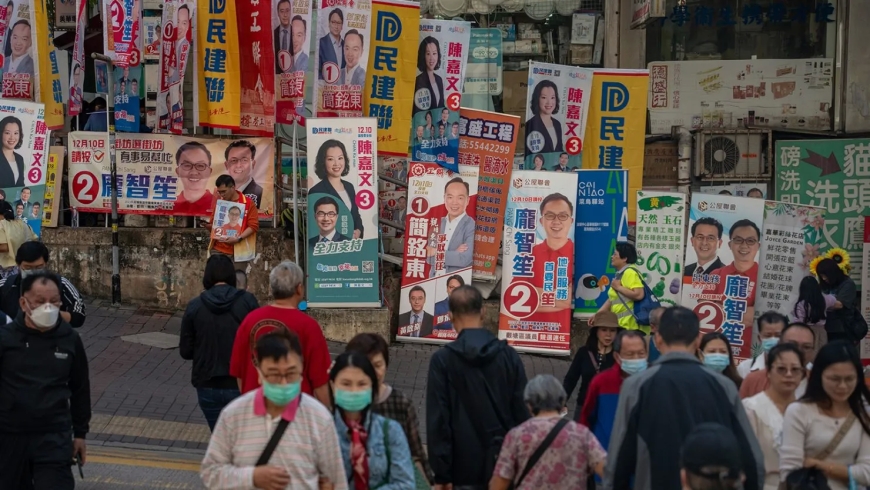
Hong Kong witnessed a notable rebuff to China's recent electoral system changes, characterized by limited participation in local polls that excluded opposition candidates. The district council elections recorded the lowest turnout in decades, with less than 1.2 million Hong Kongers, representing just 27.5% of eligible voters, participating. This marks a significant decline from the 2019 elections, where historic anti-government protests led to a turnout of 71%.


The electoral overhaul, emphasizing a "patriots only" approach, effectively barred Hong Kong democrats from running. The restructuring reduced the number of directly elected district council seats by 80%, leaving only 88 out of 470 seats. Candidates are now required to undergo national security screening and secure nominations from government-appointed committees.
Despite district council seats traditionally dealing with hyper-local matters like bus routes and garbage collection, the recent overhaul has reshaped their significance. Previously, the majority of these seats were directly elected, turning the elections into a de facto protest referendum in 2019.
John Lee, Hong Kong's leader, characterized the elections as the final step in implementing the principle of "patriots governing Hong Kong." He emphasized the shift away from district councils as platforms for opposing the government and promoting Hong Kong independence.
The broader impact of these changes extends to the city's legislature, now predominantly occupied by "patriots" following a historic low turnout of 30.2% in the 2021 vote. Pro-democracy figures who organized an unofficial primary vote for that election are currently facing charges of subversion in a landmark national security trial.
The electoral restructuring is a component of China's broader initiatives, led by the ruling Communist Party, to reshape Hong Kong following the 2019 mass protests. In the subsequent year, Beijing introduced a comprehensive national security law in the semi-autonomous city, criticized for curbing political opposition and freedoms. The Hong Kong government asserts that the law has quelled disorder and reinstated stability in the city. However, Sunday's district council elections saw a significant downturn in participation, with less than 1.2 million Hong Kongers, constituting only 27.5% of eligible voters, engaging in the polls.
John Burns, emeritus professor at the University of Hong Kong, highlighted that many voters were disheartened by the lack of political diversity, essentially being asked to endorse candidates predetermined by the government. Despite the authorities' endeavors to mobilize citizens, similar to the Legislative Council elections, these efforts largely went unnoticed.
Burns noted that citizens might perceive the elections as unfair or illegitimate due to the removal, intimidation, disqualification, closure, or imprisonment of opposition leaders and parties. Consequently, many might view participation in the new arrangements as futile or a waste of time. He characterized the elections as little more than an opportunity for citizens to express support for the government, as evidenced by the 70% who chose not to participate. Despite the Hong Kong government's concentrated attempts to bolster voter numbers, the low turnout on Sunday reflects a widespread sense of disillusionment among the populace.