












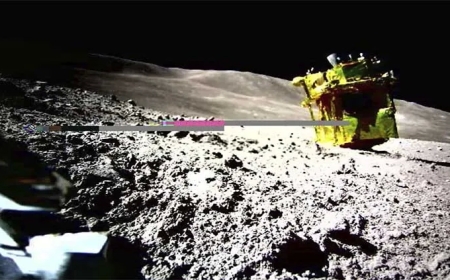
















Japan's lunar lander responds to an Earth transmission with a "miracle."
Read about Japan's remarkable feat as its SLIM probe survives the lunar night unexpectedly, marking a significant milestone in lunar exploration. Despite facing challenges, the mission proves successful, with implications for future space endeavors.

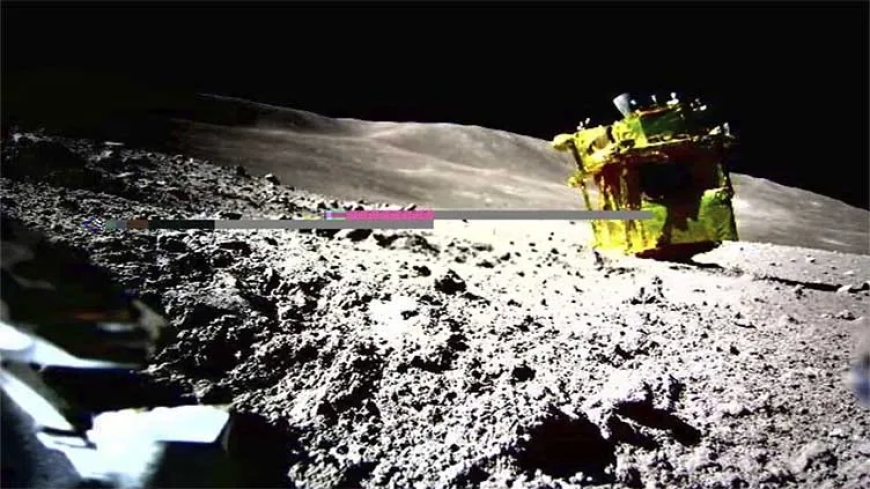
Japan's Aerospace Exploration Agency (JAXA) expressed astonishment at the unexpected survival of its SLIM probe, which was not built to endure the harsh lunar night. Despite encountering obstacles, the SLIM probe, also known as the "moon sniper," executed a precise touchdown on January 19th, marking Japan's entry as the fifth nation to effectively land a probe on the moon.


Although it landed impressively close to its target within 55 meters (180 feet), a glitch with its solar panels initially imperiled the mission. Due to a probable malfunction with one of its main thrusters, the probe ended up inverted, with its solar panels turned away from the sun. Consequently, the craft had to rely on its battery, which had a 74% charge upon landing.
With battery power dwindling rapidly, mission control had to initiate hibernation mode just three hours after landing. Fortunately, the probe managed to restore power over a week later, overcoming the challenges posed by the lunar environment.
JAXA confirmed the probe's survival through a lunar night, despite communication being limited due to high temperatures. Now, the agency is preparing to re-establish contact once the probe has cooled down.
Despite these setbacks, the mission is celebrated as a success, fulfilling its primary goal of landing within a designated 100-meter target zone. Moreover, the technology utilized in this mission holds promise for future explorations, particularly in scouting potential sources of fuel, water, and oxygen.