


















China requests that the major nuclear-armed states develop a pact on "no-first-use."
The Chinese foreign ministry’s arms control department proposes negotiations for a treaty on the no-first-use of nuclear weapons among states with the largest arsenals. Sun Xiaobo emphasizes fulfilling nuclear disarmament responsibilities and addressing emerging security challenges.

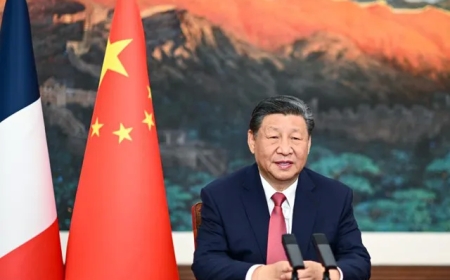
The arms control department of the Chinese foreign ministry has urged states possessing the largest nuclear arsenals to engage in negotiations for a treaty concerning the no-first-use of nuclear weapons against each other or to issue a significant political statement advocating such a stance.


Sun Xiaobo, the director general of the department, emphasized the imperative for nuclear states to uphold their distinct responsibility for nuclear disarmament, as outlined by the U.N. Conference on Disarmament. This initiative, aimed at preventing nuclear warfare, was reported by the official news agency Xinhua on Wednesday.
During the weekly meeting of the forum in Geneva on Monday, Sun articulated the necessity for the body to establish a clear roadmap or timetable towards crafting an international legal framework safeguarding non-nuclear-weapon states from the looming threat of nuclear armament. "Nuclear-weapon states should engage in discussions and reach consensus on a treaty renouncing the first use of nuclear weapons against each other, or at the very least, issue a substantial political declaration to this effect," Sun emphasized.
Presently, China and India stand as the sole nuclear powers officially committed to a no-first-use policy. Meanwhile, Russia and the United States boast the largest nuclear arsenals globally. Sun additionally advocated for the implementation of a comprehensive, nondiscriminatory non-proliferation strategy, coupled with stringent export controls, to address burgeoning global security concerns. He stressed the necessity for increased compliance in biochemical domains to uphold the integrity of existing arms control frameworks.
Furthermore, Sun underscored the obligation of the U.N. disarmament forum to remain vigilant against emerging scientific and technological threats, including those posed by artificial intelligence, outer space, and cyber warfare.
Characterizing the current international strategic security landscape as fraught with new challenges, Sun lamented the recurrent trend among nations possessing formidable military capabilities to unilaterally withdraw from treaties in pursuit of absolute supremacy, thus underscoring the pressing need for concerted diplomatic efforts toward nuclear disarmament and global security.