

























NASA observes a stadium-sized asteroid traveling through Earth. Are we going to die?
: Explore the first comprehensive images of asteroid 2008 OS7 captured by NASA's Deep Space Network radar. Learn about its size, spin, and orbit as it passed safely by Earth on February 2.

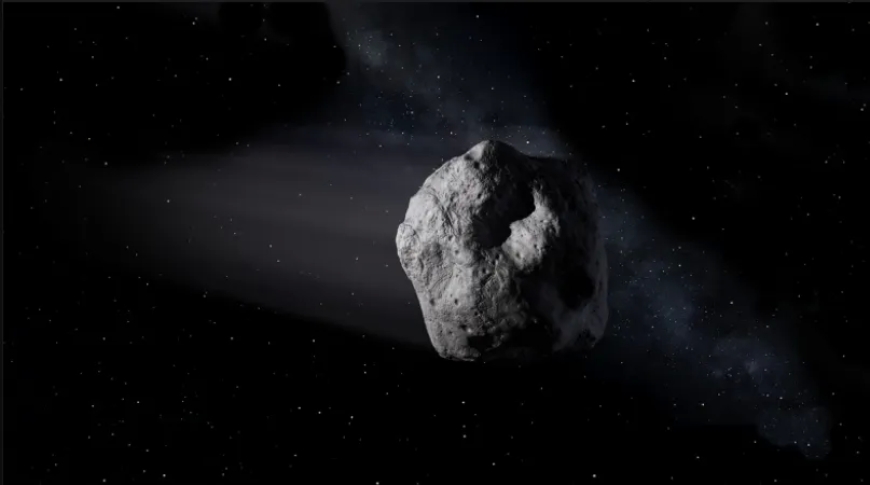
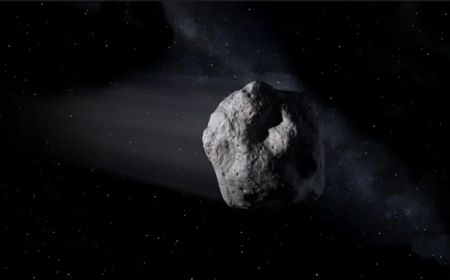
NASA's Deep Space Network's planetary radar has unveiled detailed images of asteroid 2008 OS7, described as "stadium-sized," as reported by Interesting Engineering.


On February 2, as the asteroid made its close approach to Earth, NASA's Jet Propulsion Laboratory (JPL) in Southern California utilized the 230-foot (70-meter) Goldstone Solar System Radar antenna dish at the Deep Space Network's Barstow facility to capture the images. Despite its massive size, the asteroid posed no risk of impact, orbiting safely at a distance of 1.8 million miles (2.9 million km), approximately 7 ½ times the Earth-Moon distance.
Discovered in 2008 by the NASA-funded Catalina Sky Survey, this marked the first time scientists could gather intricate data about the asteroid due to its proximity.
The captured data allowed JPL scientists to analyze the asteroid's dimensions, rotation, shape, and surface characteristics. Reflecting light measurements indicated a width ranging from 500 to 650 feet (150 to 200 meters), with the asteroid exhibiting a relatively slow rotation, completing one full turn in approximately 29 ½ hours.
NASA's Center for Near Earth Object Studies (CNEOS) utilized the new distance measurements to refine calculations concerning the asteroid's orbital trajectory around the Sun.
Despite being classified as a potentially hazardous asteroid due to its size and proximity, 2008 OS7 posed minimal risk during its closest approach on February 2, the closest it would come to Earth in at least two centuries.
Managed by JPL, CNEOS maintains a focus on identifying and tracking objects larger than 460 feet (140 meters) that could potentially pose a threat if they were to impact Earth.