












G7 financial summit divided over Russia's assets
French Finance Minister Bruno Le Maire challenges US Treasury Secretary Janet Yellen's stance on monetizing frozen Russian assets, revealing deep divisions within the G7. Read about the legal, economic, and moral debates surrounding the issue.

French Finance Minister Bruno Le Maire publicly opposed US Treasury Secretary Janet Yellen's assertion that it would be legally acceptable to monetize approximately $300 billion in frozen Russian assets, underscoring significant discord within the Group of Seven (G7) nations.


Following a G7 finance officials meeting, Le Maire dismissed the US stance, affirming France's belief that there isn't adequate grounding in international law to proceed and emphasized the necessity for further deliberation.
He emphasized that any actions must be firmly rooted in international law and enjoy the support of all Group of 20 (G20) member states, which encompass Russia, China, and other nations critical of the United States.
For a year now, G7 officials have grappled with determining the fate of Russian sovereign assets immobilized following Moscow's invasion of Ukraine in February 2022. G7 leaders have requested potential solutions by June.
Discussions this week on the sidelines of a G20 finance ministers meeting in Sao Paulo underscored the considerable ground yet to be covered.
On Tuesday, Yellen asserted there was a compelling legal, economic, and moral basis for deriving value from the Russian assets, either through outright seizure or collateralization, citing the "countermeasures theory" to justify such actions under international law.
Asked about the countermeasures theory, Le Maire expressed disagreement, stressing the need for broad international consensus.
Despite public disagreements, a Western official, speaking on condition of anonymity, noted a strong G7 agreement that Moscow should be held accountable for the damage it caused. The official also highlighted growing confidence among experts in a legal pathway for seizing the frozen assets.
Le Maire highlighted the European Union's use of windfall profits from the frozen assets as a significant step forward, a sentiment echoed by German Finance Minister Christian Lindner, who advocated utilizing interest accrued from the assets to support Ukraine.
While Washington supports the windfall tax proposal, it argues for more significant action given the severity of Russia's invasion.
Canada's Finance Minister Chrystia Freeland also emphasized the urgent need to proceed with confiscating frozen Russian sovereign assets to aid Ukraine.
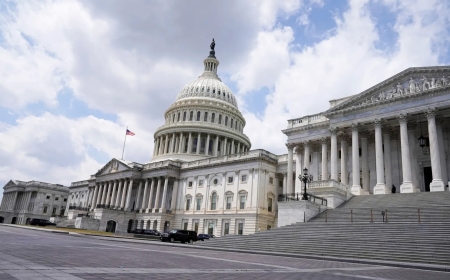
The issue has gained prominence since the Republican-led US House of Representatives blocked $61 billion in additional aid to Ukraine.
Experts anticipate it may take a year or more to unlock the assets' value, requiring domestic legislation in most, if not all, countries holding Russian assets.