
























The first solar observatory in India enters its planned orbit with success.
India's inaugural solar observatory, the Aditya-L1 spacecraft, has achieved its designated orbit, announced the country's Space Research Organisation on Saturday,

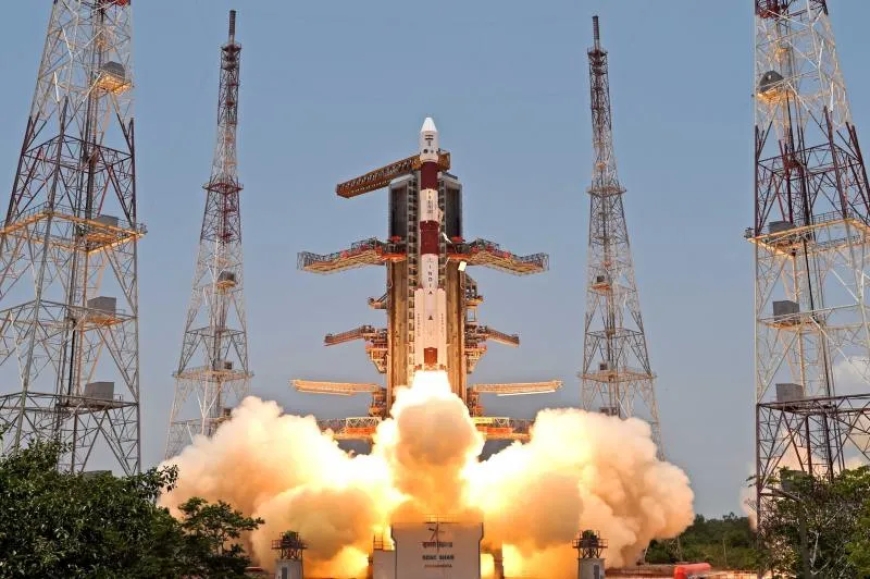
India's inaugural solar observatory, the Aditya-L1 spacecraft, has achieved its designated orbit, announced the country's Space Research Organisation on Saturday, marking a significant stride in India's pursuit to establish itself as a burgeoning space power.


The Aditya-L1 safely positioned itself at Lagrange Point L1, a location in space offering unobstructed views of the sun situated approximately 1.5 million kilometers (almost a million miles) from Earth. This achievement opens avenues for scientists to advance their exploration of the Sun-Earth System.
Indian Prime Minister Narendra Modi commended this "extraordinary feat" in a Saturday post, highlighting the dedication of the nation's scientists in executing one of the most intricate space missions.
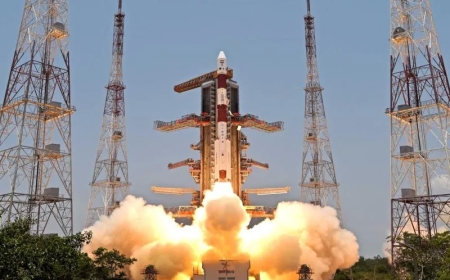
Launched on September 2, the Aditya-L1's successful mission followed less than two weeks after the historic landing of the Indian Space Research Organisation's (ISRO) Chandrayaan-3 spacecraft on the moon's South Pole.
Equipped with seven scientific instruments, the spacecraft focuses four of them directly on the sun, while the remaining instruments study solar wind particles and magnetic fields at Lagrange Point L1.
The primary objectives of the mission encompass studying the sun's upper atmosphere and various solar phenomena, including coronal mass ejections – large expulsions of plasma from the sun's outermost layer.
The insights gained from Aditya-L1's experiments will contribute to a clearer understanding of space weather, referring to the magnetic waves traversing our solar system. Space storms, which can impact Earth when reaching our atmosphere, occasionally affect satellites, radio communications, and even power grids, according to the US National Oceanic and Atmospheric Administration.
India's Aditya-L1 will complement data collected from other sun-studying missions, including NASA's ongoing Parker Solar Probe, which, in 2021, became the first spacecraft to "touch" the sun.