













A senior EU official advocates for a new defense industry policy that prioritizes the use of domestically produced weapons.
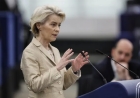
European Commission President Ursula von der Leyen advocates for a revamped defense industry strategy amidst Russia's aggression towards Ukraine, emphasizing the need for increased defense spending and collaborative procurement within Europe.

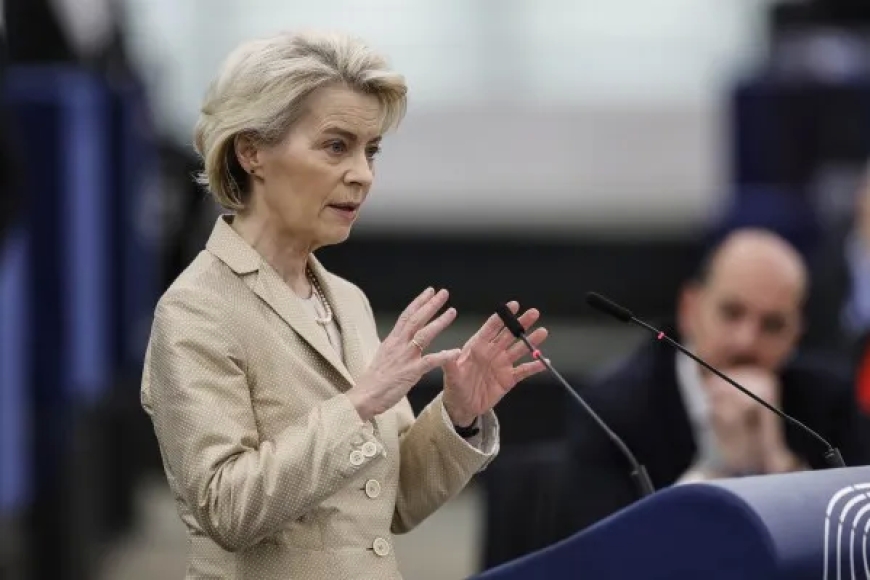
European Commission President Ursula von der Leyen emphasized the urgent need for a revamped defense industry strategy in response to Russia's aggression towards Ukraine. She called for a shift towards purchasing weapons and ammunition manufactured within Europe to address security challenges effectively.


The conflict in Ukraine has laid bare significant deficiencies in Europe's arms production capabilities. The defense industry, hesitant to invest in personnel and equipment without concrete orders, has struggled to increase production promptly, particularly concerning artillery shells crucially required by Ukraine.
The looming possibility of former U.S. President Donald Trump returning to power, potentially weakening support for Ukraine, has further galvanized European leaders. Heavyweights like France and Germany have stressed the necessity for the European Union (EU) to bolster its defenses.
Von der Leyen emphasized the concept of European sovereignty, asserting the importance of Europe taking responsibility for safeguarding its vital interests and values. Presenting her vision to members of the European Parliament, she underscored the principle that Europe must enhance its defense expenditure and prioritize European-made weaponry.
The conflict in Ukraine has prompted European nations to increase defense spending significantly, with substantial funds allocated for purchases from the U.S. defense industry. For instance, Germany announced a 100 billion euro ($108 billion) upgrade of its armed forces, with a significant portion earmarked for U.S. F-35 fighter jets and transport helicopters.
Von der Leyen advocated for greater collaborative purchasing among EU countries, akin to the collective procurement of vaccines during the pandemic. To incentivize the industry to undertake more risks, she proposed EU guarantees for advance weapons orders.
Although production is showing signs of improvement, the EU has fallen short of its target of producing 1 million artillery shells annually. However, officials anticipate reaching a production rate of 1.4 million shells per year by the end of December.
Von der Leyen also proposed utilizing the windfall profits from frozen Russian assets to jointly procure military equipment for Ukraine. Several billion euros' worth of Russian assets are held in Europe, with Belgium alone estimating around 180 billion euros ($195 billion).
As part of her campaign for a second term, Von der Leyen expressed support for the creation of a designated defense commissioner within the EU commission. However, details regarding the scope of this portfolio were not elaborated.
While the EU lacks a unified army, member states maintain sovereign control over their respective armed forces. EU foreign policy chief Josep Borrell emphasized that a designated defense commissioner would primarily focus on enhancing Europe's defense industry, as a standalone defense role would contravene existing EU treaties.
Von der Leyen announced that the commission would present proposals for the new defense industry strategy in the coming weeks.