




















To produce next-generation fighter planes in Britain, the UK strikes agreements with Italy and Japan


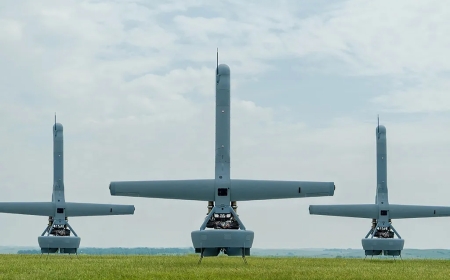
The UK has entered into an international treaty with Japan and Italy to develop the next generation of stealth fighter jets. The Global Combat Air Programme (GCAP), a defense partnership between the three nations, will be headquartered in Britain. A year ago, Prime Minister Rishi Sunak announced the collaborative effort to build military planes with supersonic capability and advanced technology, named Tempest in the UK, to take to the skies by 2035 as a successor to the RAF Typhoon.


The Ministry of Defence (MOD) stated that signing the treaty in Tokyo on Thursday marked a "key stage" in the aircraft's development. Defence Secretary Grant Shapps, along with his Italian and Japanese counterparts, Guido Crosetto and Minoru Kihara, signed the document in the Japanese capital. Shapps emphasized that the combat aircraft program aims to be crucial to global security, making positive progress toward delivering the new jets to respective air forces by 2035.
The completed Tempest is expected to feature a powerful radar providing 10,000 times more data than current systems. Pilots will have access to a digital cockpit with virtual reality capabilities, displaying vital information directly in front of them. The on-board weapons system will utilize artificial intelligence and machine learning to enhance the effectiveness of its arsenal. The UK government has committed £2 billion to the project up to 2025.
BAE Systems, in collaboration with Leonardo UK, missile maker MBDA UK, and Rolls-Royce, secured the contract for the project. Joint development of the aircraft is scheduled to commence in 2025. The treaty confirms that the UK will host the joint GCAP government headquarters, initially led by a Japanese chief executive. The locations for the government HQ and a separate industry base in the UK, led by an Italian, will be announced in due course, along with a timeline for opening. The treaty will be sent to all three national parliaments for ratification as the next step in the collaborative effort.