
























Weeks after hundreds of people were evacuated from a community on the Reykjanes Peninsula, an Icelandic volcano explodes

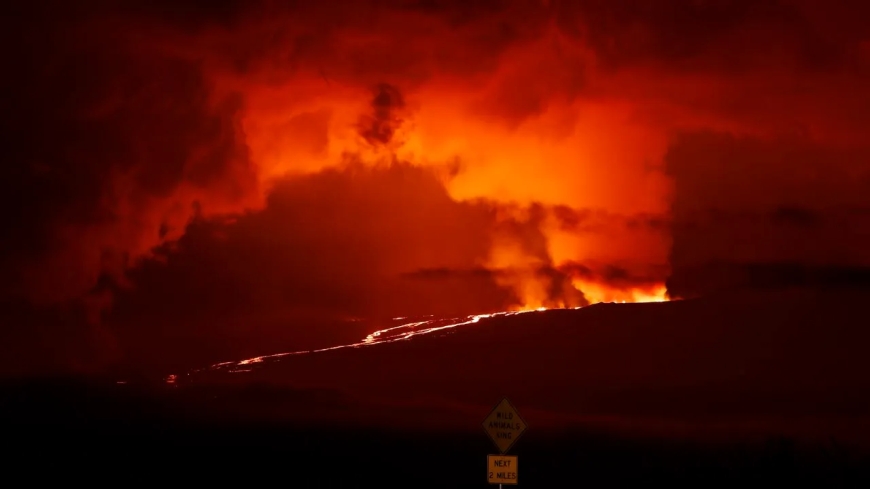
On Monday night, a volcanic explosion began on Iceland's Reykjanes Peninsula, causing the sky to glow orange and raising the nation's civil defense to a high alert.


According to the Icelandic Meteorological Office, the eruption appears to have happened around four kilometers (2.4 miles) from the town of Grindavik. A grainy camera footage captured the explosion at 22:17 local time when a burst of light illuminated the sky. Magma, or semi-molten rock, was spotted erupting along a hill's ridgeline as the eruption expanded. It appears that the magma is flowing at a rate of at least 100 cubic meters per second, if not faster. According to Vidir Reynisson, Head of Iceland's Civil Protection and Emergency Management, "so this would be considered a big eruption in this area at least," RUV, the country's official broadcaster, said.
Police ordered the village of Grindavik to be evacuated in November due to severe seismic activity that had destroyed homes and sparked worries of an impending eruption. With an average eruption occurring every four to five years, Iceland is situated atop a volcanic hot zone in the North Atlantic. The most disruptive in recent memory was the Eyjafjallajokull volcanic eruption in 2010, which caused massive clouds of ash to shoot into the skies and halted flights throughout Europe for days due to concerns that the ash may harm aircraft engines.
Scientists predict that lava, not an ash cloud, will likely result from a fresh eruption. On X, formerly known as Twitter, Iceland's foreign minister Bjarne Benediktsson stated that there are "no disruptions to flights to and from Iceland and international flight corridors remain open."
A Coast Guard helicopter will monitor the amount of gas released as well as try to pinpoint the precise position and extent of the eruption. 3,400-person Grindavik is a fishing town on the Reykjanes Peninsula. It is located close to Keflavik Airport, Iceland's primary hub for international travel, and around 50 kilometers (31 miles) southwest of the country's capital, Reykjavik.