
























At the highest U.N. court, the US and Russia will discuss Israeli occupation.
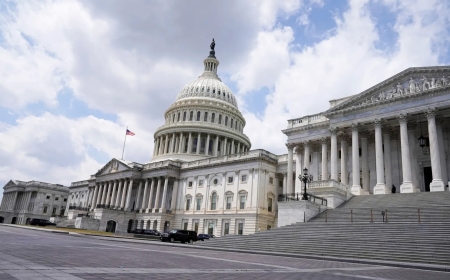
On Wednesday, the United States and Russia are set to present their arguments at the United Nation's highest court, discussing the legality of Israel's occupation of the Palestinian territories.

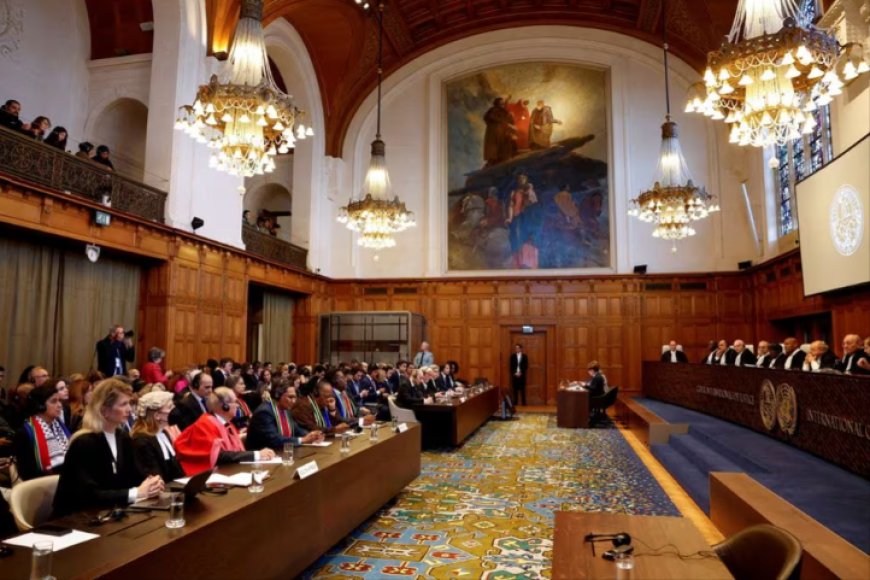
On Wednesday, the United States and Russia are set to present their arguments at the United Nation's highest court, discussing the legality of Israel's occupation of the Palestinian territories.


The International Court of Justice (ICJ), also referred to as the World Court, was tasked by the U.N. General Assembly in 2022 to provide a non-binding opinion on the legal implications of the occupation.
Israel, choosing not to participate, expressed concerns in written statements about the potentially detrimental effects of the court's involvement in reaching a negotiated settlement. In 2022, Washington opposed the court issuing an opinion and is expected to assert on Wednesday that it lacks jurisdiction to rule on the lawfulness of the occupation.
Over 50 states will present their arguments until February 26, with Egypt and France among those scheduled to speak on Wednesday.
Earlier this week, Palestinian representatives urged the judges to declare Israel's occupation of their territory illegal, emphasizing that such a ruling could facilitate a two-state solution.
On Tuesday, ten states, including South Africa, heavily criticized Israel's actions in the occupied territories, urging the court to deem the occupation illegal.
The recent escalation of violence in Gaza following Hamas' attacks in Israel on October 7 has further complicated the deeply-rooted grievances in the Middle East and impeded efforts toward peace.
The ICJ's panel of 15 judges has been tasked with reviewing Israel's "occupation, settlement, and annexation," including actions aimed at altering the demographic composition, character, and status of Jerusalem, as well as discriminatory legislation and measures adopted by Israel.
It is anticipated that the judges will take approximately six months to deliver their opinion on the matter, considering the legal status of the occupation and its ramifications for states.
Israel disregarded a World Court opinion in 2004, which deemed Israel's separation wall in the West Bank a violation of international law and called for its dismantlement. Instead, the wall has been extended.
These hearings could heighten political pressure concerning Israel's actions in Gaza, where, according to Gaza health officials, approximately 29,000 Palestinians have been killed since Hamas' attack on October 7.
In the 1967 conflict, Israel seized control of the West Bank, Gaza, and East Jerusalem—regions that the Palestinians sought for a state. While Israel withdrew from Gaza in 2005, it, along with Egypt, still maintains control over its borders.
Israeli leaders have long contested the formal occupation of these territories, arguing that they were captured from Jordan and Egypt during the 1967 war rather than from a sovereign Palestine.