























To combat Houthi attacks in the Red Sea, the US has announced a 10-nation force

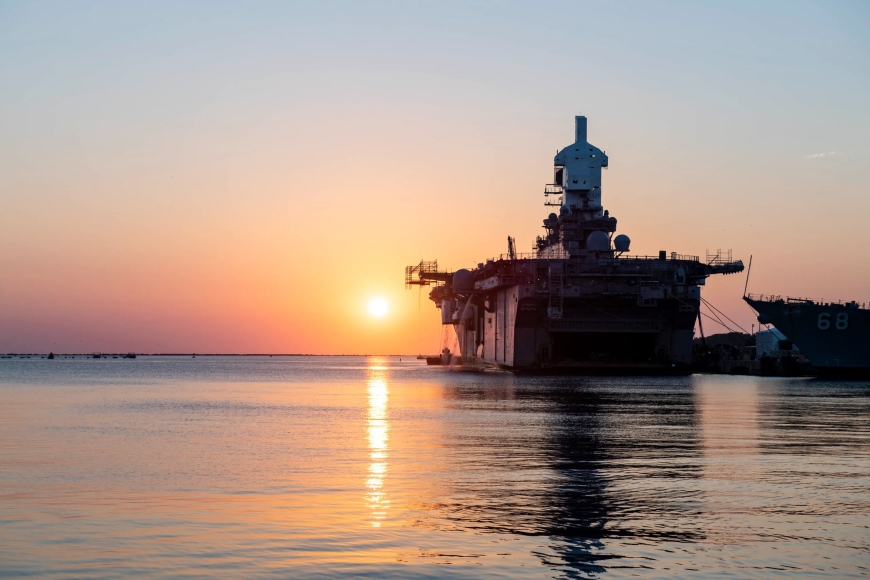
The Houthi rebels in Yemen caused many shipping firms to halt operations, and the United States has now announced the formation of a multinational force to safeguard trade in the Red Sea.


Bahrain, Canada, France, Italy, the Seychelles, and the United Kingdom will be among the ten nations that join the "multinational security initiative," according to a statement made by US Defense Secretary Lloyd Austin on Monday.
In a statement, Austin emphasized the need for countries committed to preserving the fundamental tenet of freedom of navigation to unite in addressing the challenge presented by a non-state actor. He characterized the attacks as an issue requiring collective action.
The declaration follows revelations from the US and UK navies over the weekend, stating that their destroyers had successfully intercepted and neutralized a total of 15 drones in the waterway. The Iran-backed Houthis have escalated their drone and missile assaults on vessels in critical shipping routes since the commencement of the Gaza conflict. Their targets include ships suspected of having connections to Israel or Israelis.
On Monday, the rebel group claimed responsibility for launching naval drones against the Norwegian-owned Swan Atlantic and the MSC Clara, citing solidarity with Palestinians in Gaza. Swan Atlantic's owner, Norway's Inventor Chemical Tankers, clarified that the vessel had no ties to Israel and was managed by a Singaporean company. Both vessels reported no injuries.
Mohammed al-Bukhaiti, a senior Houthi official and spokesman, asserted earlier on Monday that the group would confront any US-led coalition in the Red Sea. Safety concerns have prompted at least 12 shipping companies, including major entities like the Italian-Swiss Mediterranean Shipping Company, France's CMA CGM, and Denmark's AP Moller-Maersk, to suspend transit through the Red Sea. BP, a prominent UK oil giant, announced on Monday its decision to temporarily halt all transits through the Red Sea due to the worsening security situation.
BP stated, "We will keep this precautionary pause under ongoing review, subject to circumstances as they evolve in the region." Houthi attacks have substantially redirected global trade, compelling freight companies to navigate around Africa, resulting in increased costs and delays in the delivery of energy, food, and consumer goods. The Red Sea, connecting to the Mediterranean via the Suez Canal, facilitates about 12 percent of global trade, including 30 percent of container traffic.