









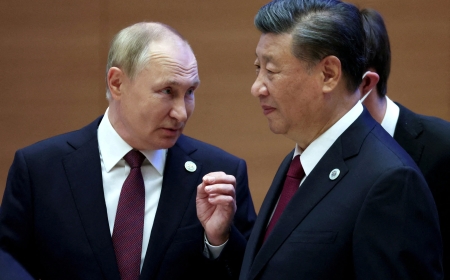





This week, the leaders of Guyana and Venezuela will meet amid concerns in the area over their territorial dispute

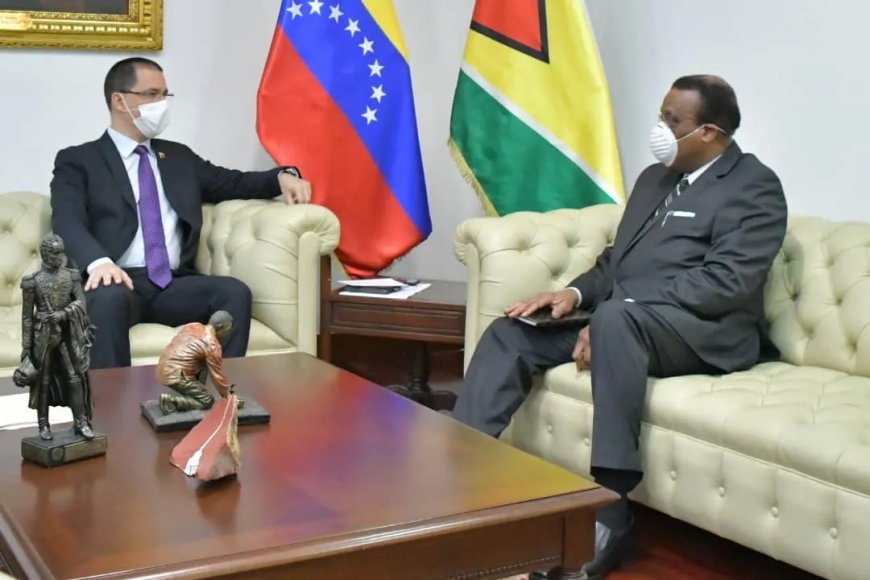
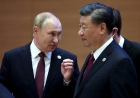
The leaders of Guyana and Venezuela have expressed their intentions to collaborate as they prepare to meet this week to address an escalating dispute over a region abundant in oil and minerals. However, their fundamentally different positions on the role of the International Court of Justice (ICJ) in resolving the disagreement seemed irreconcilable on Monday.


Venezuelan President Nicolás Maduro and other officials insist that the world court cannot settle the century-old dispute. In contrast, Guyana President Irfaan Ali stated on Sunday that the tribunal is the appropriate venue to address the matter.
Guyana presented the case to the ICJ in 2018, but Venezuela maintains that it violated a 1960s agreement between the neighboring South American countries. In a letter on Monday to Prime Minister Ralph Gonsalves of St. Vincent and the Grenadines, which will host the high-level meeting on Thursday, Maduro asserted that imposing the ICJ as an authority in seeking a solution was a violation "of the principle of mutual consent already agreed upon between the parties."
Maduro expressed concern that this could lead to a "deterioration of the situation."
The dispute over Essequibo, comprising two-thirds of Guyana and sharing a border with Venezuela, intensified following Venezuela's December 3 referendum seeking sovereignty over the region, which is near substantial oil reserves.
Venezuela contends that Essequibo was within its boundaries during the Spanish colonial era and rejects the border established by international arbitrators in 1899 when Guyana was a British colony. Venezuelan officials also argue that a 1966 agreement involving their country, Britain, and the British Guiana colony effectively annulled the original arbitration.
Guyana's President Ali stated his intention to travel to St. Vincent in good faith. However, he emphasized that Guyana would not engage in negotiations with Venezuela, insisting that the case be heard by the International Court of Justice in the Netherlands, as originally planned.