


















On its eighth mission, the US military deploys a robot spaceplane.
Two weeks after China successfully launched the Shenlong spacecraft, SpaceX's Falcon Heavy rocket was delayed in its flight.

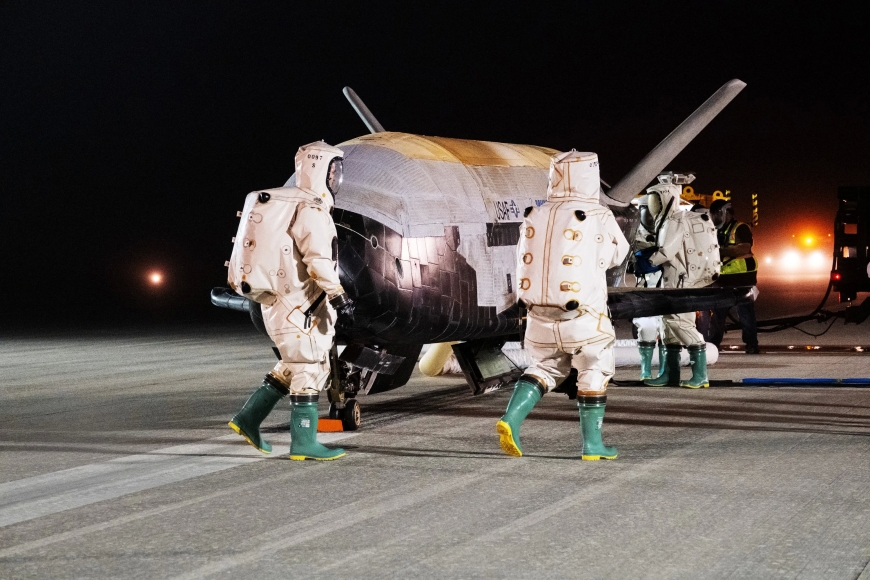
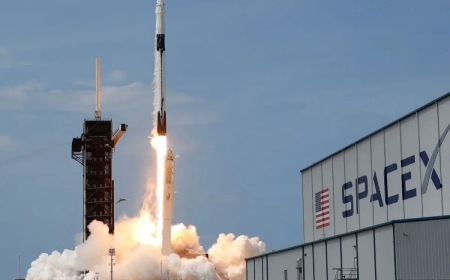
The United States military's X-37B robotic spaceplane has embarked on its seventh mission, marking a historic launch aboard a SpaceX Falcon Heavy rocket from NASA's Kennedy Space Center in Florida. This mission represents the first time the spaceplane has been launched on the powerful Falcon Heavy, capable of reaching a higher orbit than previous missions.


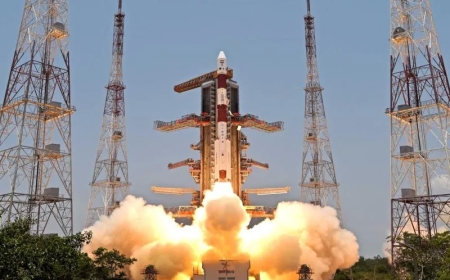
The Falcon Heavy, composed of three rocket cores, delivered a spectacular nighttime lift-off, streamed live for viewers. This development comes just two weeks after China launched its robot spaceplane, the Shenlong (Divine Dragon), adding a new dimension to the growing rivalry between the two nations in space exploration.
Details about the X-37B mission remain shrouded in secrecy, as the Pentagon has disclosed minimal information. Conducted by the US Space Force under the National Security Space Launch program, the mission is expected to span several years, leveraging the Boeing-built spaceplane, approximately nine meters in length, and resembling a miniature space shuttle.
While the specific altitude of this mission remains undisclosed, the US Air Force Rapid Capabilities Office mentioned last month that it would involve testing "new orbital regimes" and experimenting with future space domain awareness technologies. Additionally, the X-37B is experimenting to study the effects of prolonged radiation exposure in space on plant seeds.
China's Shenlong, launched on December 14 via a Long March 2F rocket, heightens the competition in space exploration. Space Force General B Chance Saltzman acknowledged the mutual interest, stating, "It's probably no coincidence that they're trying to match us in timing and sequence of this."
The planned duration of the latest X-37B mission remains undisclosed, but given the pattern of successively longer flights, it is expected to run until at least June 2026. The previous mission, the longest to date, lasted two and a half years before the spaceplane touched down at the Kennedy Space Center in November of the preceding year.