


























An erratic power outage caused the Nepal plane crash
Report Reveals Yeti Airlines Crash in Nepal Caused by Pilot Error, Resulting in Aerodynamic Stall

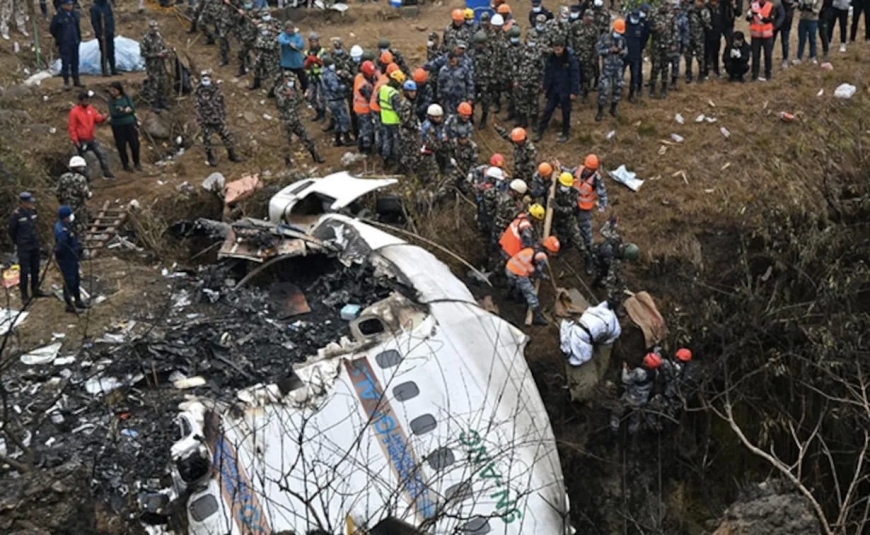
A report from a government-appointed investigation panel has identified the cause of the Yeti Airlines crash in Nepal that claimed the lives of 72 people almost a year ago. The crash, which occurred just before landing in Pokhara on January 15, has been attributed to pilot error, specifically the mistaken cutting of power, leading to an aerodynamic stall.


The twin-engine ATR 72, operated by privately owned Yeti Airlines, was carrying 72 people, including two infants, four crew members, and 15 foreign nationals. Tragically, there were no survivors in one of Nepal's worst airplane accidents in three decades.
Dipak Prasad Bastola, an aeronautical engineer and member of the investigating panel, explained that due to a lack of awareness and standard operating procedures, the pilots mistakenly placed the condition levers, which control power, in the feathering position instead of selecting the flap lever. This caused the engine to run idle and fail to produce thrust. Despite the loss of power, the aircraft continued to fly for up to 49 seconds before crashing.
The ATR 72, based in France with engines manufactured in Canada by Pratt & Whitney, faced a tragic fate as a result of the pilot error. This incident marks Nepal's deadliest air crash since 1992, underscoring the challenges posed by the country's mountainous terrain and unpredictable weather conditions.
Since 2000, nearly 350 people have lost their lives in plane or helicopter crashes in Nepal, a nation known for its mountainous landscapes, including eight of the world's 14 highest peaks. The European Union has barred Nepali airlines from its airspace since 2013, citing safety concerns. The investigation report sheds light on the critical importance of maintaining awareness and adherence to standard procedures to ensure aviation safety.