




























As traders watch the escalating tensions in the Red Sea, oil prices decline.
Oil prices witnessed a drop on Tuesday, influenced by escalating tensions in the Red Sea, coupled with record U.S. crude production and apprehensions about demand in China

Oil prices witnessed a drop on Tuesday, influenced by escalating tensions in the Red Sea, coupled with record U.S. crude production and apprehensions about demand in China. The West Texas Intermediate contract for February settled at $70.38 per barrel, down $1.27 (1.77%), while the Brent contract for March traded at $75.89, shedding $1.15 (1.49%).


Although crude prices had initially surged over 2% due to heightened Red Sea tensions, traders appear skeptical about a significant supply disruption, contributing to the downward pressure. Helima Croft, head of global commodity strategy at RBC Capital Markets, emphasized that market participants are adopting a "wait and see" approach, despite the increasing seriousness of tensions in the region.
Adi Imsirovic, an energy security expert at the Center for Strategic and International Studies and a veteran oil trader, noted that traders are predominantly focused on broader macroeconomic factors, including the unprecedented U.S. production and weakening demand in China.
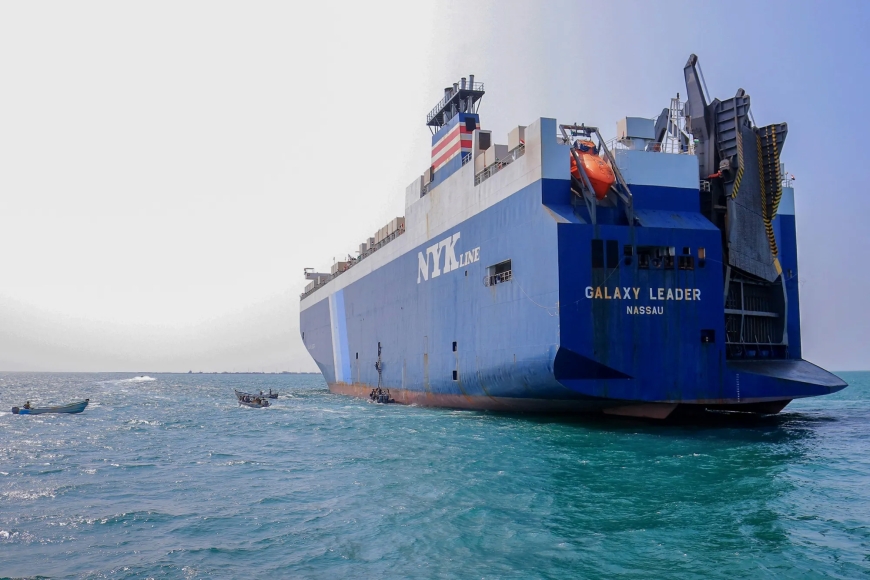
Danish shipping giant Maersk announced a temporary pause in shipping through the Red Sea following an attack on one of its vessels by militants over the weekend. Iran added to the tension by deploying a destroyer to the Red Sea, emphasizing the need to maintain a presence in international waters. The move followed U.S. Navy helicopters destroying three boats of Iran-backed Houthi rebels in response to a distress call from the Singapore-flagged vessel Maersk Hangzhou.
While Neil Beveridge, Senior Energy Analyst at Bernstein, acknowledged the potential risk premium on Brent due to the escalating conflict, he highlighted that a significant impact may not materialize unless the situation escalates further. The Houthi group's attacks on vessels in the Red Sea, particularly those connected to Israel, have prompted major shipping companies to reroute via southern Africa, bypassing the Suez Canal and Red Sea routes.
German container shipper Hapag-Lloyd has opted to continue diverting vessels around the Suez Canal. Meanwhile, the U.S. has initiated Operation Prosperity Guardian, a multinational maritime force aimed at safeguarding trade in the strategic waterway. The situation remains fluid, and market participants are closely monitoring developments that could impact global oil prices.a