

























Strong earthquakes in Japan claim the lives of at least 62 people. Concerns about rescuing captive individuals increase
A devastating series of powerful earthquakes struck western Japan, leaving at least 62 people dead, as rescue teams worked diligently to rescue those feared trapped under collapsed buildings.

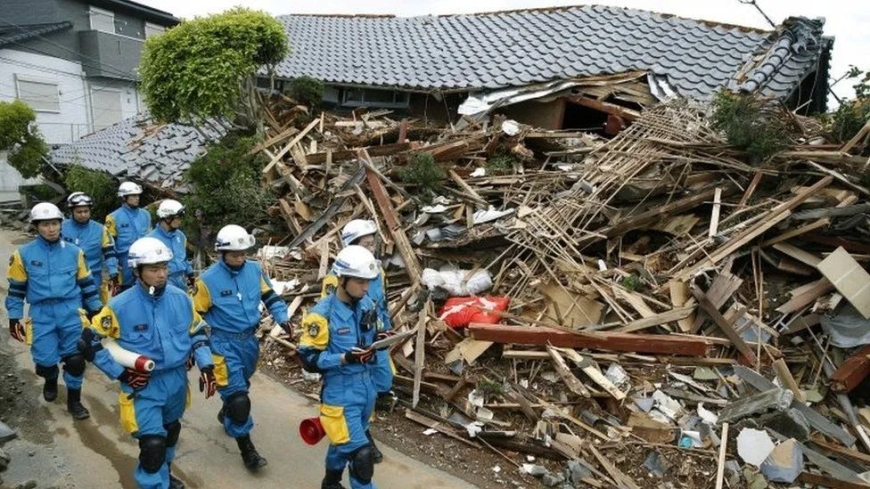
A devastating series of powerful earthquakes struck western Japan, leaving at least 62 people dead, as rescue teams worked diligently to rescue those feared trapped under collapsed buildings. A magnitude 7.6 temblor hit Ishikawa prefecture, with aftershocks continuing to shake the region two days later. Water, power, and cell phone services were disrupted in some areas, and residents faced uncertain futures as they assessed the damage.


“I don’t think we can live here anymore,” said Miki Kobayashi, a resident of Ishikawa, as she surveyed the damage around her house, which was also affected by a 2007 quake. Wajima city reported 29 deaths, while 22 people died in Suzu, according to Ishikawa Prefectural authorities. Dozens of people suffered serious injuries.
The prompt public warnings, broadcasted and relayed through phones, coupled with quick responses from the general public and officials, appeared to have mitigated some damage. Preparedness and evacuation plans were in place, reflecting the Japanese population's resilience due to previous quake experiences.
Japan, located along the "Ring of Fire," is frequently exposed to earthquakes. While the casualties continued to rise gradually, the situation remained precarious, according to Toshitaka Katada, a University of Tokyo professor specializing in disasters. Japan's military deployed 1,000 soldiers for rescue efforts, and nuclear regulators reported normal operations at several nuclear plants in the region. The Japan Meteorological Agency issued a major tsunami warning for Ishikawa and lower-level warnings for the western coast of Japan’s main island of Honshu, which were later downgraded. Worries about crumbling buildings and infrastructure arose as weather forecasters predicted rain in the region. Cultural heritage sites and tourist spots famous for traditional crafts were also affected.
Global leaders, including Australian Prime Minister Anthony Albanese and President Joe Biden, expressed support for Japan in the wake of the earthquakes.