























Dubai's new Dhs278 million street lighting initiative will increase traffic safety.
Dubai's Roads and Transport Authority (RTA) has allocated Dhs278 million for a major street lighting project, part of its Street Lighting Plan 2023-2026.

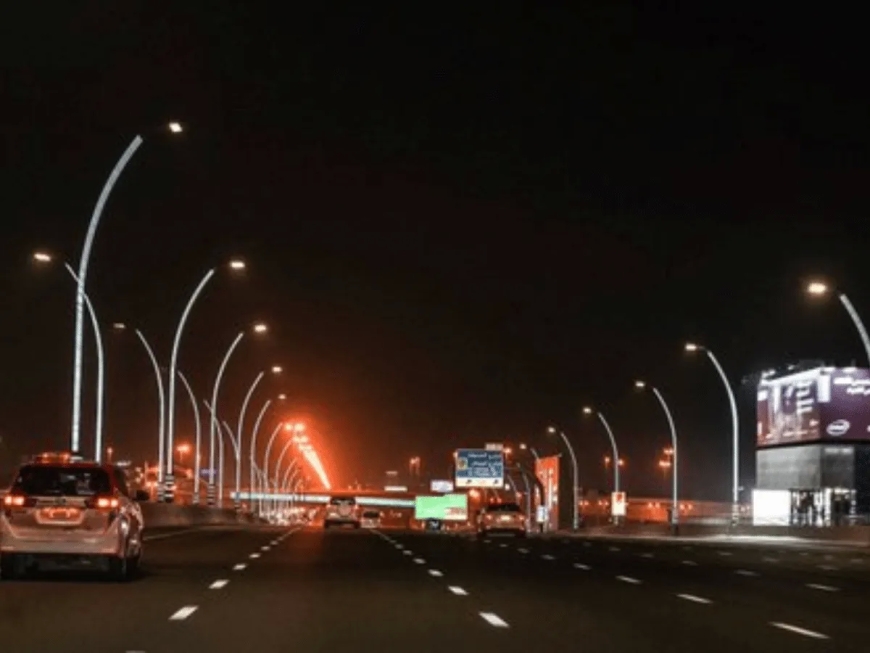
Dubai's Roads and Transport Authority (RTA) has allocated Dhs278 million for a major street lighting project, part of its Street Lighting Plan 2023-2026. Announced on X (formerly Twitter) on January 2, the initiative aims to cover 40 districts and streets, enhancing Dubai’s road network to meet the demands of the growing population.


H.E. Mattar Al Tayer, the Director General and Chairman of the Board of Executive Directors of RTA emphasized the primary goal of the plan, stating, “The main goal of this plan is to improve traffic safety and security for all road users, including vehicles and pedestrians. The initiative is designed to contribute to the well-being and satisfaction of residents and visitors in the targeted areas. The selection of these areas is based on careful consideration of traffic safety and security standards, traffic volumes, and the pace of urban growth.”
Neighborhoods benefiting from the project in 2024 include Mirdif, Al Baraha, Oud Metha, Al Waheda, Al Hudaiba, Al Satwa, Abu Hail, and Al Bada’a, where previously unlit roads will be illuminated. New lights will also be added to Umm Suqeim 1, 2, and 3, Al Safa 1 and 2, Al Manara, Al Mariyal Reserve Street, and the road to Al Minhad Air Base. The plan extends to areas such as Umm Al Sheif, Al Sufouh 1, Al Quoz Residential Areas 1 and 3, Nad Al Hamar, and Al Awir 2 in 2025. In 2026, the project will further cover Al Mamzar, Oud Al Muteena, streets and parking lots in various regions, including Al Garhoud, Al Twar, Hasyan, Al Jafiliya, Al Marmoom, Al Qusais 1 and 2, Nad Al Sheba 1, Al Warsan 2, Hind City, Business Bay, Umm Ramool, Ras Al Khor Industrial Area 1 and 2, and Ras Al Khor Industrial Area 3 Street.
The new streetlights will utilize energy-efficient LED technology, providing a 55 percent reduction in energy consumption and a 173 percent increase in lifespan.