



























Peru deems an "imminent" dengue epidemic to be a health emergency.
Peru declares a health emergency as dengue fever cases surge amidst a heat wave and heavy rains, with 32 reported deaths and over 31,000 cases this year. Health Minister Cesar Vasquez announces measures to tackle the outbreak.

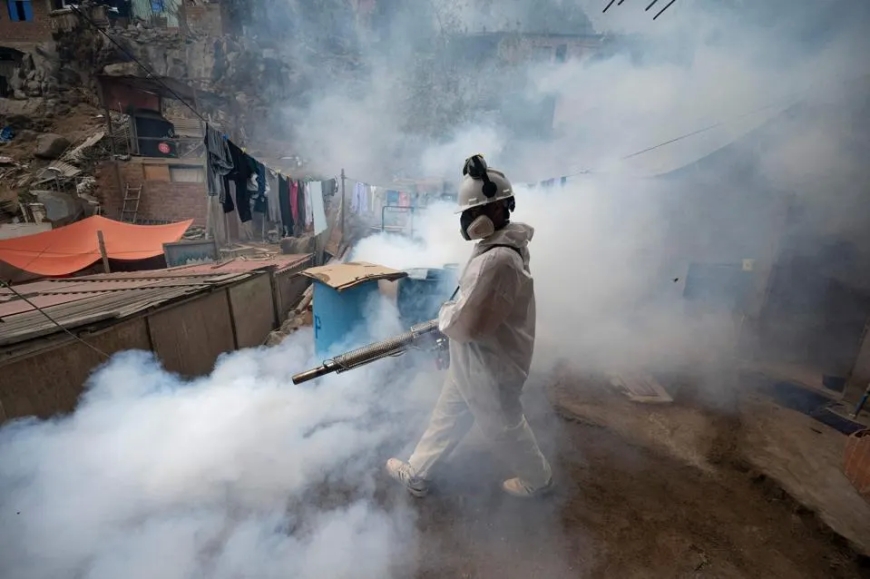
Peru, grappling with a surge in dengue fever cases exacerbated by a heat wave and heavy rains, declared a nationwide health emergency on Monday. Health Minister Cesar Vasquez disclosed that the death toll from the virus had climbed to 32 this year.


In the first eight weeks of the year, total reported cases soared to 31,300, marking a significant increase from the 24,981 cases reported in the preceding seven weeks, according to Vasquez.
The decision to declare a health emergency was approved by Peru's government cabinet on Monday, with Vasquez informing journalists shortly after warning of an impending dengue outbreak.
Vasquez highlighted that out of Peru's 25 regions, 20 would be declared in a state of health emergency due to dengue. This declaration aims to enhance resources allocated to health responders in the affected areas.
Dengue fever, primarily transmitted through mosquito bites, manifests symptoms such as fever, nausea, vomiting, fatigue, and body aches. The majority of cases in Peru have surfaced in the northern regions, where hospitals are already overwhelmed.
Vasquez noted that Peru's traditional response to dengue has been overwhelmed by various factors, including climatic conditions. He emphasized that the prevailing weather conditions have created ideal breeding grounds for mosquitoes, accelerating their reproduction and increasing the frequency of disease transmission.
Last year, official data reported 428 dengue-related deaths and 269,216 infections in Peru. Since 2023, the nation has experienced elevated temperatures and heavy precipitation attributed to the El Niño weather phenomenon, which has caused the warming of the seas along Peru's coastline.