


























Under Israeli occupation, Nasser Hospital in Gaza becomes "a place of death."
United Nations officials recount the dire situation at Gaza's Nasser Hospital, transformed by Israeli military action into a "place of death." Despite efforts to evacuate patients, critical shortages persist. Get insights on the unfolding humanitarian crisis.

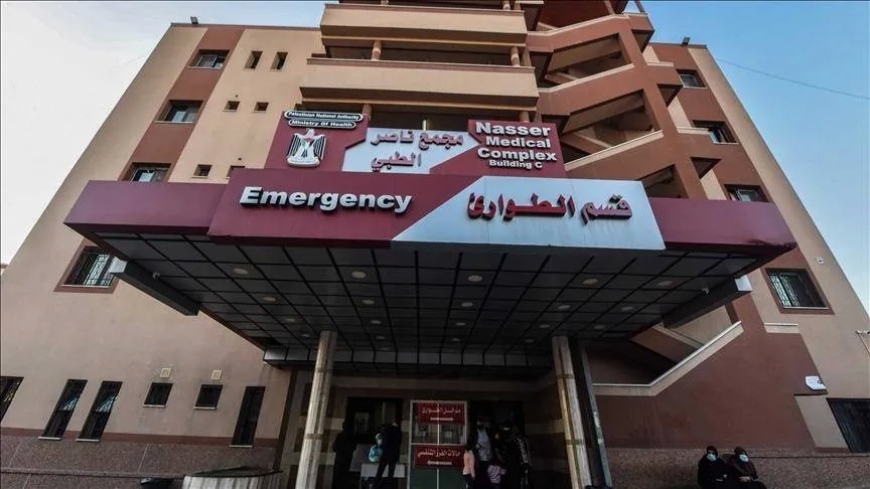
Officials from the United Nations have provided harrowing descriptions of the conditions inside Gaza's Nasser Hospital, portraying a stark reality of suffering amidst intensified Israeli military operations. Once a beacon of healing, the hospital now stands as a symbol of devastation, according to accounts shared in online videos on Wednesday.


The situation has raised alarm for the fate of numerous patients and staff members who find themselves trapped within the besieged facility. Located in Gaza's Khan Younis city, Nasser Hospital ceased its operations after enduring a week-long siege followed by a military raid, as reported by the World Health Organization (WHO). Collaborative efforts between WHO, the UN Office for the Coordination of Humanitarian Affairs (OCHA), and the Palestinian Red Crescent Society (PRCS) have led to the evacuation of 32 critical patients, including children and individuals with severe injuries.
Jonathan Whittal, representing OCHA, participated in evacuation missions on February 18 and 19, painting a grim picture of desperation among patients lacking essentials such as food, water, and electricity. He described the scene as "appalling," with corpses strewn across corridors, lamenting the hospital's tragic transformation from a place of healing to one of death.
The evacuation teams encountered immense challenges, navigating through darkened corridors amidst gunfire. Accessing the hospital on foot became necessary due to impassable roads caused by a muddy ditch nearby. Julio Martinez from WHO emphasized the unprecedented severity of the situation, citing debris, darkness, and the overwhelming presence of patients in need of urgent care.
Tragically, Palestinian health authorities confirmed the loss of eight lives within the hospital premises, primarily due to the lack of essential resources such as fuel and oxygen. Accusations were leveled against Israeli forces, accused of militarizing the hospital surroundings and exacerbating the humanitarian crisis.
Chris Black, a communications officer for WHO, highlighted the extensive damage inflicted upon the hospital and its surroundings, emphasizing the absence of necessities like electricity, food, and water. Despite the dire circumstances, the remaining medical staff expressed a plea for the restoration of hospital functions rather than immediate evacuation.
Dr. Thaer Ahmad, an emergency physician who previously volunteered at Nasser Hospital, conveyed the anguish of his former colleagues and their earnest desire to continue providing care to patients. He relayed their urgent call for support in restoring hospital operations, underscoring the critical need for essential supplies and infrastructure repairs.
The WHO reiterated its commitment to ongoing evacuation efforts while condemning the degradation of Nasser Hospital as a significant setback for Gaza's already strained healthcare system. With medical facilities operating well beyond capacity, the region faces an increasingly dire humanitarian crisis exacerbated by the ongoing conflict between Israel and Hamas.
According to the Palestinian Health Ministry, the toll of casualties continues to mount, with thousands of lives lost, predominantly among women and children, underscoring the urgent need for international intervention and a lasting resolution to the conflict.