























North Korea resumes firing missiles into the sea by launching a long-range ballistic missile

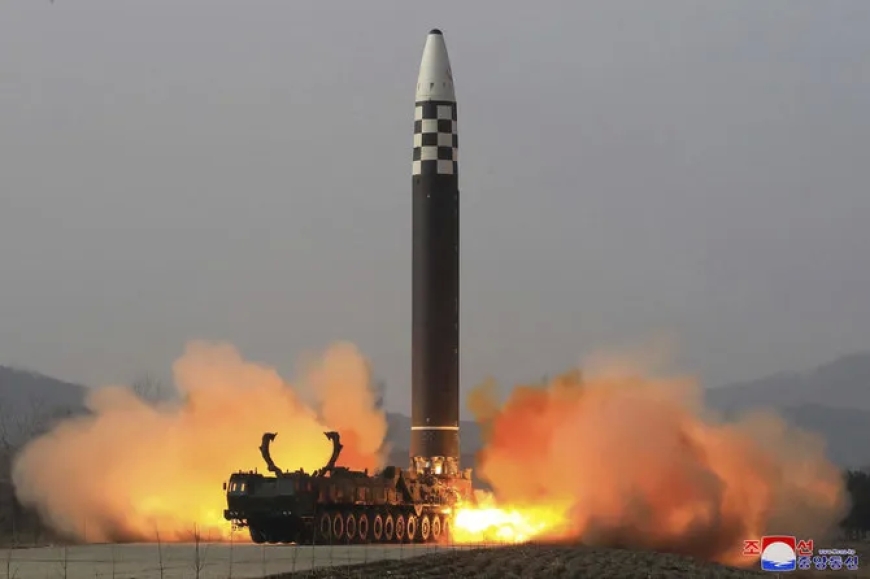
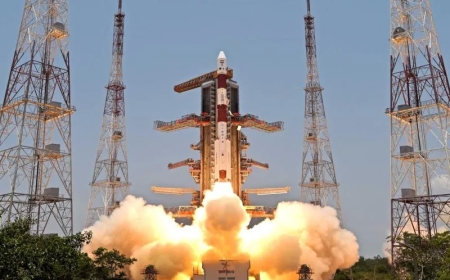
North Korea's neighbors reported that the North fired an intercontinental ballistic missile into the sea on Monday, continuing its highly publicized weapons testing operations. The North also threatened to retaliate strongly against any steps by the United States and South Korea to strengthen its nuclear deterrent strategies.


The North Korean missile traveled over 1,000 kilometers (620 miles), according to a statement from the South Korean military, before coming to rest in the waters between Japan and the Korean Peninsula. According to the report, the missile was launched at an oblique angle in an apparent attempt to avoid nearby nations. The launch was described as "a grave provocation" that endangered world peace in the statement. It further mentioned that the launch went against resolutions of the UN Security Council that forbid North Korea from engaging in any ballistic missile-related activity.
The Defense Ministry of Japan reported that it had also seen a North Korean ballistic missile launch. Fumio Kishida, the prime minister of Japan, informed reporters that he would be holding a meeting of the National Security Council to review the test and that he had not yet received any reports of injuries or damage resulting from the missile launch. The North fired its second weapon in less than a day with this launch, which was its first ICBM test flight in about five months. The governments of South Korea, Japan, and the United States claim that the North shot a short-range ballistic missile into the sea off its east coast on Sunday night.
The short-range missile, according to South Korea's military, traveled around 570 kilometers (354 miles) before coming to rest in the seas between Japan and the Korean Peninsula. There are American military stations in South Korea, among other important locations, within range of the device. The launch, according to the US military, brought "the destabilizing impact of (North Korea's) illicit weapons program" to light. The North's consecutive rocket launches, according to observers, were probably a protest against South Korea's and the US's efforts to strengthen their combined nuclear deterrence capabilities in the face of North Korea's growing nuclear threats.
Senior officials from the United States and South Korea convened in Washington on Friday for the second meeting of the Nuclear Consultative Group. During the meeting, both parties reached an agreement to modernize their nuclear deterrence and contingency strategies. Additionally, they decided to integrate nuclear operation scenarios into their joint military exercises scheduled for next summer, as reported by officials from Seoul. The Nuclear Consultative Group plays a crucial role in the exchange of information related to nuclear and strategic weapons operation plans, as well as collaborative military operations. It was emphasized, however, that the operational control of U.S. nuclear weapons will remain under U.S. authority.
U.S. officials clarified that the establishment of the consultative group and other measures taken aimed to reinforce the U.S. commitment to security, addressing South Korea's concerns about potential North Korean provocations. The intention is to dissuade Seoul from pursuing its independent nuclear program. A joint statement issued after the meeting on Friday emphasized the U.S. commitment to respond swiftly, overwhelmingly, and decisively to any nuclear attack by North Korea against South Korea. In response to the decision to include nuclear operation scenarios in their joint drills, North Korea's Defense Ministry criticized the move, characterizing it as an overt threat that raises the possibility of using nuclear weapons against North Korea.