




















Bangladesh's poll is won by Hasina, but its legality is called into question by the opposition's boycott and poor turnout.
Prime Minister Sheikh Hasina has secured a commanding majority in Bangladesh's parliamentary election

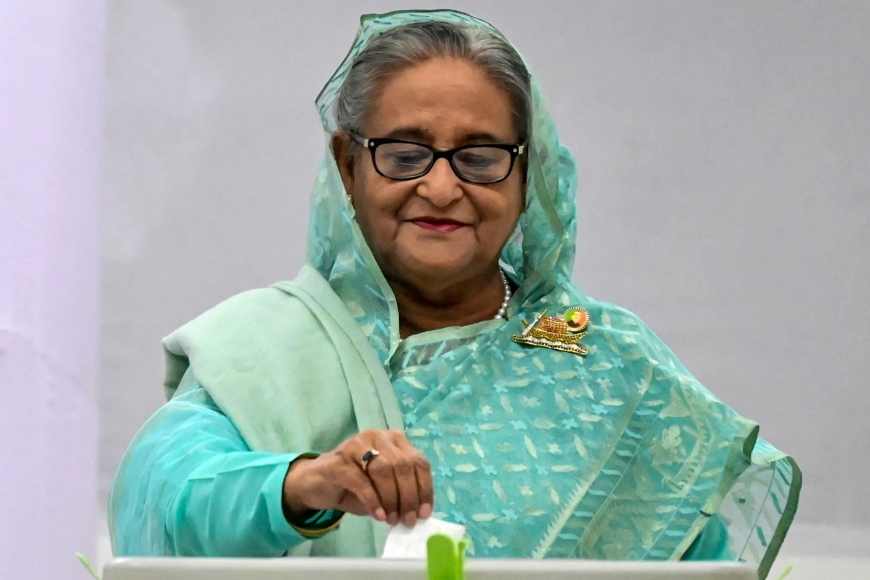
Prime Minister Sheikh Hasina has secured a commanding majority in Bangladesh's parliamentary election, marking her and the Awami League's fourth consecutive term despite a campaign marred by violence and a boycott by the main opposition party. According to TV stations and initial results, the Awami League won 216 out of 299 seats, while independent candidates secured 52, and the Jatiya Party took 11 seats. The election was held in 299 out of 300 parliamentary seats, with one seat's election postponed due to the death of an independent candidate.


The election results have been met with skepticism and refusal to accept by the main opposition Bangladesh Nationalist Party (BNP), led by former premier Khaleda Zia. The BNP alleges that the government, led by Hasina, has transformed Bangladesh into a one-party state, stifling dissent and civil society.
Violence, including arson attacks, preceded the vote, but election day itself passed relatively calmly. Turnout was around 40%, according to Chief Election Commissioner Kazi Habibul Awal. The BNP has blamed the government for the violence, while authorities accused the BNP of seeking to sabotage the election.
Hasina's victory, if confirmed, would add to the contentious political landscape. The bitter rivalry between the Awami League and the BNP, led by Zia, has long characterized Bangladesh's politics. Zia, currently ailing and under house arrest on corruption charges, claims the charges are politically motivated.
The election, marked by a lack of major challengers to the incumbent, raises questions about its credibility. Critics argue that past elections under Hasina have been marred by allegations of vote rigging, a charge the government denies. The BNP had demanded a neutral caretaker government to oversee the election, but the government rejected the request.
The vote has also been clouded by accusations of a crackdown against the BNP, with the party claiming that around 20,000 of its members were jailed ahead of the vote on politically motivated charges. The government disputed the figures, stating that arrests were made based on non-political grounds.
Hasina is credited with economic transformation and maintaining diplomatic ties in a nation born out of war. However, critics argue that her leadership risks undermining democracy and freedom in Bangladesh, as government agencies use oppressive measures against critics and restrict civil society. The global economic slowdown has further exposed economic issues in Bangladesh, leading to labor unrest and dissatisfaction.