
























Ugandan Traditional Brew Tonto Faces Threats as Authorities Seek Regulation
A popular alcoholic banana beverage in Uganda is in danger as government officials attempt to limit amateur brewers.

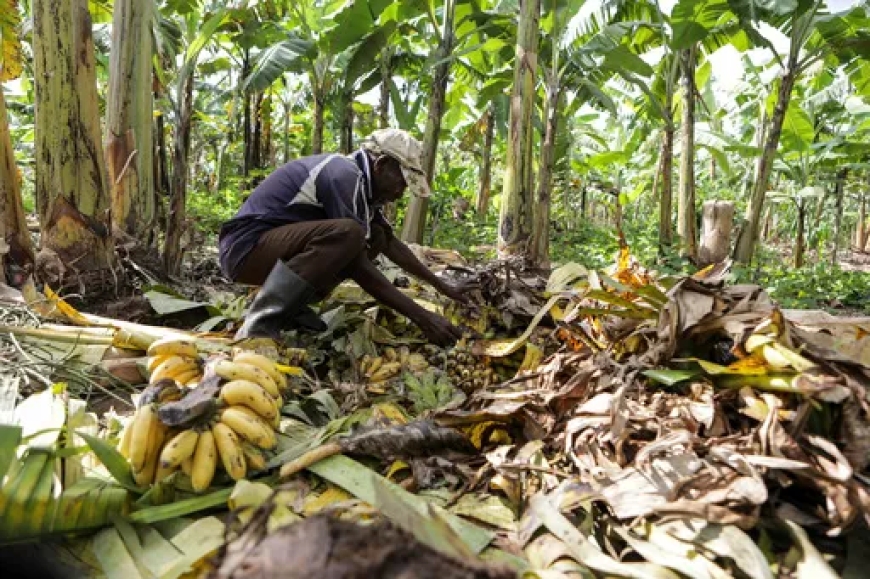
Girino Ndyanabo's family has a weekly tradition of gathering around a pit filled with ripening bananas, peeling them, and tossing them into a boat-shaped wooden vat. With bare feet, the patriarch extracts sweet juice, which is filtered, mixed with sorghum grains to create ethanol, and left to ferment for up to a day. The result is a popular Ugandan beverage known as tonto, celebrated for its fruity aroma and bits of sorghum floating on its dark surface.


Tonto holds legendary status in Uganda, with folk singers, politicians, and traditional ceremonies embracing its cultural significance. However, the production of tonto faces challenges as cheap bottled beer gains popularity, and authorities seek to regulate the production of what they consider illicit home brews, citing the risk of contamination. A bill in the national assembly aims to criminalize activities related to traditional brews, including tonto, prompting concerns among farmers.
The primary concern among farmers is the insufficient planting of new banana juice cultivars needed for tonto production. Communities prioritize commercially viable varieties used for popular dishes like matooke, a boiled and mashed banana preparation. Ndyanabo, a farmer in Mbarara, sources his bananas from nearby farmers, but the cultivation of the specific cultivars needed for tonto is dwindling.
Despite the assured market for his weekly brew, Ndyanabo notes a slowdown in both demand and supply. The static retail price of Toronto over the years and the increasing complexity of the brewing process contribute to these challenges. The extended distances traveled to find bananas and rising sorghum prices add to the difficulties faced by tonto producers.
Ndyanabo is attempting to address the issue by planting faster-growing banana juice cultivars. Despite the challenges, the family produces five or six 20-liter batches of tonto each week, selling a jerrican for about $8. However, the retail price of Tonto remains lower than the cheapest bottled beer, impacting the economic viability of its production.
Customers like Benson Muhereza, an electrician, appreciate tonto as a favorite non-alcoholic drink with lunch, describing it as a "porridge" without a hangover. Christine Kyomuhangi, a Tonto seller, acknowledges the threats to her business but remains optimistic about its sustainability, asserting that "Tonto will never get finished."