




















Putin’s Opposition leader found in an Arctic penal colony after missing for weeks
Three months before a presidential poll authorities sent Alexei Navalny, the most well-known opposition figure in Russia, to a remote prison colony.

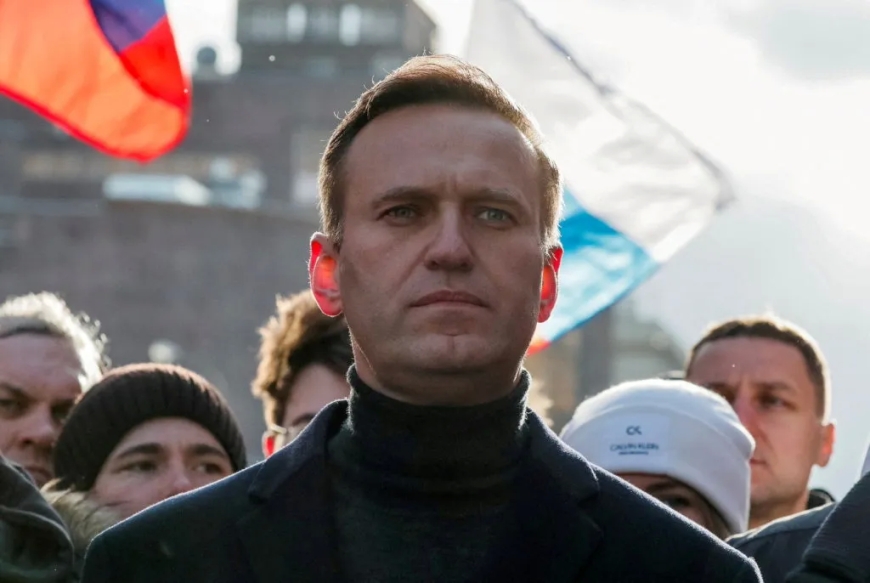
Jailed Russian opposition leader Alexei Navalny's location has been disclosed as he was moved to a penal colony in the Arctic, according to his allies on Monday, ending over two weeks of uncertainty. Authorities transferred Navalny, a prominent critic of the Russian government, to an isolated penal colony three months ahead of a presidential vote that is expected to secure Vladimir Putin a fifth term.


"We have found Alexei Navalny," announced his ally, Kira Yarmysh, on social media. She stated that Navalny is now in IK-3 in the settlement of Kharp in the Yamalo-Nenets Autonomous District, located above the Arctic Circle. Ivan Zhdanov, who manages Navalny's Anti-Corruption Foundation, described Kharp as "one of the most northern and remote colonies" with harsh conditions and a special regime in the permafrost zone.
The news of Navalny's discovery prompted reactions from the international community. Washington welcomed reports of Navalny being found alive but criticized Moscow for its "malicious targeting" of him and other political prisoners. The US State Department expressed deep concern for Navalny's well-being and the conditions of his detention, calling for his immediate release and an end to Russia's repression of independent voices.
France also condemned the transfer, denouncing Russia for "blatant violations of human rights."
Navalny, known for mobilizing large anti-government protests, survived an assassination attempt by poisoning in 2021 before being jailed. After spending most of his detention at the IK-6 penal colony, he received a 19-year sentence on extremism charges, leading to a transfer to a harsher special regime prison.
The lack of information on Navalny's whereabouts had raised concerns, with allies sending requests to over 600 detention centers. The move is seen as part of Kremlin efforts to isolate Navalny, especially in the lead-up to the presidential vote in March 2024, where Putin is expected to be the favorite.
The Russian government has been criticized for years for suppressing independent politicians and activists, a crackdown that intensified after the deployment of Russian troops into Ukraine in 2022. Navalny's movement was declared extremist even before the Ukraine offensive, facilitating the prosecution of its members and supporters.
In a related development, several regional heads of the Anti-Corruption Foundation, including Navalny's ally Lilia Chanysheva, have been jailed. Chanysheva received a seven-and-a-half-year prison sentence in the central Bashkortostan Republic. Many high-profile allies, such as Maria Pevchikh, who runs the Anti-Corruption Foundation from abroad, have fled and faced Russian arrest warrants.