




















One of the top national organizations promoting sustainable investing is DEWA

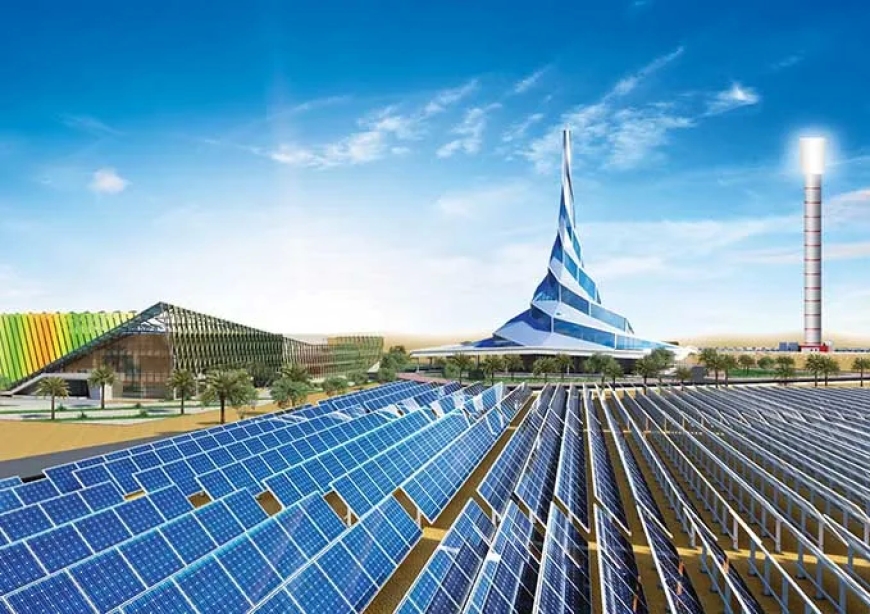
The Dubai Electricity and Water Authority (DEWA) stands out as a key entity attracting both public and private sector investors in the UAE. These investments play a crucial role in advancing global clean and renewable energy projects, envisioning environmentally friendly financing solutions, and developing climate finance methods to address the challenges of climate change. DEWA's Independent Power Producer (IPP) projects aim to promote collaboration with like-minded partners, fostering sustainable investments and establishing a new financing model that aligns with both climate and development objectives. The partnership model between the public and private sectors developed by DEWA serves as a pioneering example, attracting investments in energy and water in Dubai while facilitating knowledge transfer and the adoption of modern technologies in line with international best practices.


The UAE's commitment to sustainable financing is highlighted as a significant achievement, aligning with the pillars of the United Nations Framework Convention on Climate Change (COP28), hosted by the UAE at Expo City Dubai from November 30 to December 12, 2023.
Saeed Mohammed Al Tayer, MD & CEO of DEWA, emphasized the organization's dedication to the directives of UAE leaders and its support for comprehensive development through constructive public-private partnerships. DEWA's successful partnership model with the private sector has attracted over AED 43 billion in investment since 2014, contributing to the sustainable development of the energy sector and positioning Dubai as a global hub for green economy initiatives. Al Tayer underscored the importance of achieving the Dubai Clean Energy Strategy 2050 and Dubai Net Zero Carbon Emissions Strategy 2050, emphasizing DEWA's commitment to good governance, transparency, and accountability to enhance investor confidence.
The Independent Power and Water Producer (IPWP) model, tailored to Dubai's legislative and technical requirements, facilitates integrated solutions for energy and water technologies. DEWA ensures robust support for its private sector partners, streamlining procedures and accelerating the implementation of energy and water projects in alignment with the emirate's strategic objectives. David Hay, President of Brand Finance, praised DEWA's efforts, emphasizing its role in mobilizing investments for the green energy transition and promoting collaboration between public and private sector stakeholders to advance the UAE Green Agenda and international climate goals.
DEWA's ongoing projects with the private sector under the Independent Power Producer (IPP) model currently boast a capacity exceeding 4,000 megawatts (MW). Utilizing this model, DEWA has realized substantial cost savings, amounting to approximately AED 26 billion, providing the flexibility to invest in additional infrastructure projects. The IPP model has not only delivered exceptional outcomes but has also set a new standard for solar energy prices per kilowatt-hour, positioning Dubai as a global benchmark in this regard.
In alignment with the Dubai Clean Energy Strategy 2050, the funding pillar prioritizes the exploration of financing solutions for research and development in clean energy and its various applications. A key component of this pillar is the Dubai Green Fund (DGF), which holds membership in the Global Impact Investing Network—an influential non-profit organization committed to enhancing the scale and effectiveness of impact investing. Impact investing, a relatively recent term, refers to investment funds and global companies spanning diverse asset classes, sectors, and regions, with a focus on advancing societal or environmental causes while generating financial returns. This approach has witnessed substantial growth in investments targeting companies that contribute positively to social or climate impact. Many of these mutual funds operate as private equity firms, often exclusive to institutional or accredited investors, willing to accept lower liquidity and returns in exchange for making a more significant positive impact.