


























Maersk to resume Red Sea shipping with the deployment of a US-led coalition
Although concerns about growing transportation costs have been heightened by the Houthi Red Sea attacks, container ship businesses' stocks have rallied.

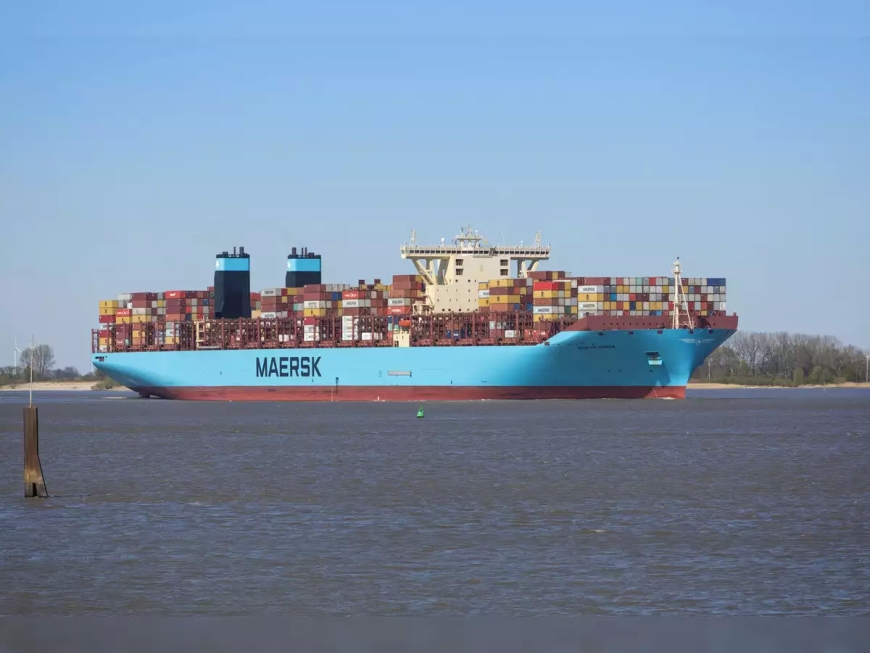
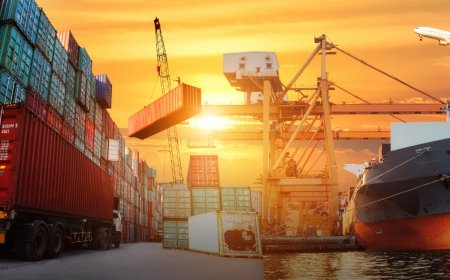
The world's second-largest container shipping company has announced plans to resume operations in the Red Sea after temporarily suspending activities due to maritime attacks by Houthi rebels. Maersk revealed on Sunday that its vessels would recommence sailing, citing the deployment of a new US-led task force as a key factor in enhancing maritime security in the region.


In a statement, Maersk stated, "We have received confirmation that the previously announced multi-national security initiative Operation Prosperity Guardian (OPG) has now been set up and deployed to allow maritime commerce to pass through the Red Sea-Gulf of Aden and once again return to using the Suez Canal as a gateway between Asia and Europe."
The decision to establish the task force came in response to a series of missile and drone attacks by the Houthi rebels, who claimed these actions were a reaction to Israeli aggression in Gaza. The US reported that the Houthis had launched over 100 drone and missile attacks on ten commercial vessels in the Red Sea, causing disruptions in global trade flows and leading to higher shipping costs, especially for container ships transporting goods between Europe and Asia.
The Red Sea, a vital trade route accounting for 12 percent of global trade and 30 percent of all container ship traffic, has witnessed vessels rerouting around the Cape of Good Hope in Africa due to the disruptions. This longer journey has contributed to a significant increase in freight rates, surging by 44 percent to $2,413 this month, as reported by the freight booking and payments platform, Freightos.
Despite the Houthis claiming to target only Israeli-linked vessels, some ships with no ties to Israel have been affected. The attacks prompted a surge in stock prices for container shipping companies, reminiscent of the impact seen during the 1967 war when the Suez Canal was closed, leading to skyrocketing rates.
Maersk, while expressing its intention to restart operations in the area, emphasized its ongoing evaluation of the associated risks. Analysts note that the Houthis' apparent readiness for a confrontation with the US and Israel over the Red Sea adds complexity to the situation. The US-led Operation Prosperity Guardian has opted for defensive measures to protect commercial vessels, steering away from retaliatory strikes against the Houthis.
However, the reluctance of Gulf states to join the task force, with only Bahrain signing on, underscores the delicate diplomatic balance in the region. Concerns persist that aligning with Israel may be perceived negatively amid ongoing outrage over the conflict in Gaza. Saudi Arabia, a key player with a large Red Sea coastline, engaged in peace talks with the Houthis, remains cautious about openly confronting the group.
"Iran and the Houthis have managed to intimidate their Arab neighbors. The Gulf states have everything to lose picking a fight with Iran, and Iran has nothing to lose. The Houthis and Iran have already won," stated Ali Alfoneh, a senior fellow at the Arab Gulf States Institute. Meanwhile, the Houthi attacks have elevated their standing in the region, with the seized ship Galaxy Leader turned into a tourist attraction, reflecting the complex dynamics at play in the Red Sea.