















Due to Pyongyang's most recent missile launch, North Korea and Russia argue with the US, South Korea, and allies

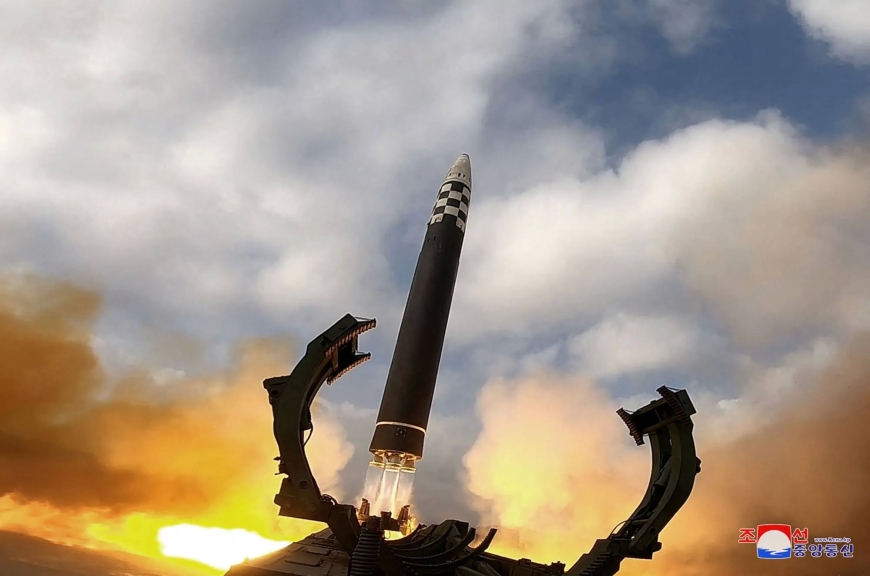
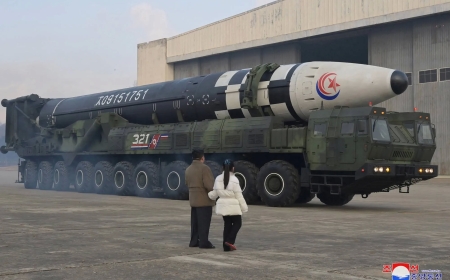
At an emergency U.N. Security Council meeting on Tuesday, North Korea and Russia clashed with the United States, South Korea, and their allies over Pyongyang's recent intercontinental ballistic missile (ICBM) launch. North Korea characterized the launch as a "warning countermeasure" in response to perceived threats from the U.S. and other adversarial forces.


North Korean Ambassador Kim Song declared that the current year is "the most dangerous" in the military-security landscape on the Korean Peninsula. He cited heightened U.S.-South Korean military exercises and the deployment of U.S. nuclear-powered submarines and other nuclear assets to the region, asserting that these actions have escalated the risk of a "nuclear war danger."
In response, the U.S. and nine allies highlighted North Korea's actions, including five ICBM launches, over 25 ballistic missile launches, and three satellite launches employing ballistic missile technology throughout the year. These activities are deemed to violate multiple Security Council resolutions, posing a direct threat to "the peace and stability of its neighbors and the international community."
Surrounded by diplomats from the other nations, U.S. Deputy Ambassador Robert Wood issued a statement just before the council meeting in which the ten nations denounced the most recent ICBM launch on December 18 as well as all previous launches.
Kim called North Korea's countermeasures an "absolutely reasonable, normal and reflective response" in the exercise of its legal right to self-defense, and he encouraged the international community to consider the country's security concerns. North Korea's armed forces "will never remain an onlooker to it and the provokers will be held entirely responsible for all the consequences," he threatened if the United States and South Korea persisted "with their reckless and irresponsible military threat."
Kim issued a warning, saying that North Korea will "continue to build up its strategic power of a more advanced type to contain and control any threat from the U.S. and its followers with immediate, overwhelming, and decisive counter-measures."
Sanctions were initially imposed by the Security Council following North Korea's first nuclear test explosion in 2006. Over the years, these sanctions were incrementally tightened through a total of 10 resolutions, all aimed at, albeit unsuccessfully, cutting funds and curbing North Korea's nuclear and ballistic missile programs. The most recent sanctions resolution was passed by the council in December 2017. However, in May 2022, a U.S.-sponsored resolution seeking to impose new sanctions in response to a series of intercontinental ballistic missile launches was vetoed by China and Russia. Since then, the two veto-wielding council members have consistently thwarted any council action, including media statements.
Expressing concern over the Security Council's prolonged silence, 10 countries — Albania, Ecuador, France, Japan, Malta, South Korea, Slovenia, Switzerland, the United Kingdom, and the United States — emphasized that this silence "sends the wrong message to Pyongyang and all proliferators." They called on North Korea to abandon its unlawful nuclear and ballistic missile programs, redirecting resources toward addressing the needs of the North Korean people and engaging in diplomatic efforts. The group also urged all Security Council members to break their protracted silence and uphold the nuclear nonproliferation regime. In response, Russia's deputy U.N. ambassador, Anna Evstigneeva, criticized attempts to condemn Pyongyang, characterizing them as "a one-sided approach."