















Donald Trump cannot be the US president, according to Colorado's highest court

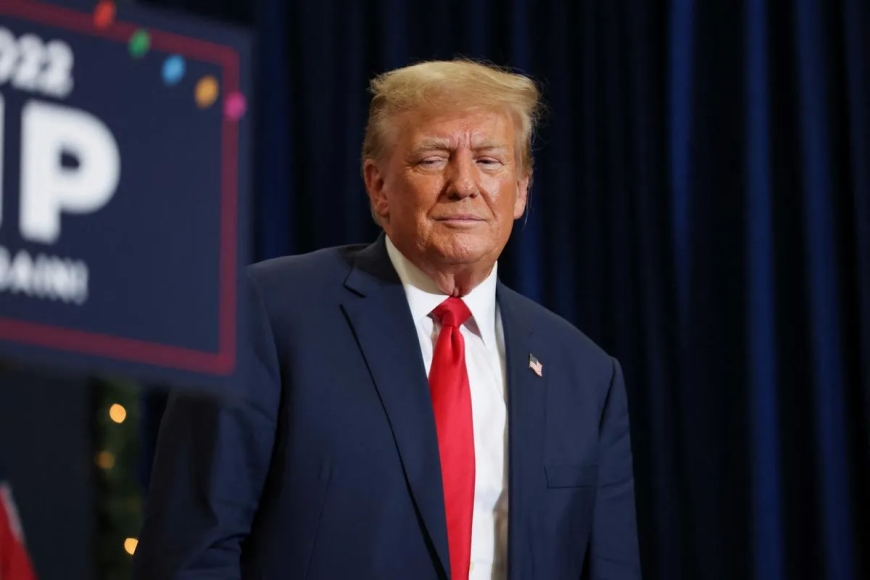
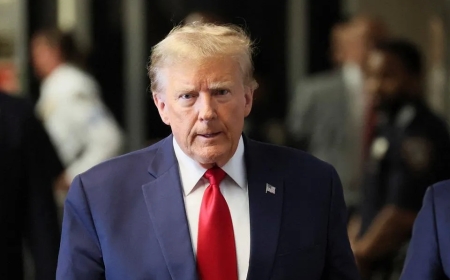
The Colorado Supreme Court has decided that former US President Donald Trump should not be allowed to compete in the state's primary due to his involvement in his followers' 2021 Capitol attack.


Although the decision only pertains to Colorado, it is significant because it is the first time in US history that a presidential candidate has been disqualified under Section 3 of the 14th Amendment, which prohibits anyone who "engaged in insurrection" from holding public office. This development coincides with courts in other states considering comparable legal actions.
In a four-three majority decision, the Colorado high court has determined that President Trump is ineligible to hold the office of President under Section Three of the Fourteenth Amendment to the United States Constitution.
The court stated, "A majority of the court holds that President Trump is disqualified from holding the office of President under Section Three of the Fourteenth Amendment to the United States Constitution." The decision further emphasized that listing him as a candidate on the presidential primary ballot would constitute a wrongful act under the Election Code due to his disqualification. The court acknowledged the gravity of its conclusions, stating, "We do not reach these conclusions lightly."
Trump's campaign expressed its intention to appeal the decision, prompting immediate condemnation from Republicans. The former property tycoon and reality TV star currently faces a multitude of legal challenges, ranging from criminal charges related to alleged attempts to overturn the 2020 election to accusations of mishandling classified documents, hush money payments in the 2016 election, and fraud in his business practices. Throughout these legal battles, Trump has consistently asserted that he is the victim of political persecution.
The Colorado judges declared, "We are mindful of the magnitude and weight of the questions now before us." "We are also conscious of our grave responsibility to uphold the law, without fear or favor, and without being influenced by the public's response to the decisions that the law requires us to make."
Although Trump incited an uprising for his part in the attack on the Capitol on January 6, 2021, a lower court had determined that he could not be disqualified from voting because it was not evident that the 14th Amendment was meant to apply to the president. The upper court's decision on Tuesday was applauded by Noah Bookbinder of the Washington-based campaign organization Citizens for Responsibility and Ethics, which launched the first lawsuit in conjunction with a group of Colorado voters.
He stated in a statement that the court's ruling is "not only historic and justified but is necessary to protect the future of democracy in our country."
"It is quite evident from our Constitution that individuals who betray our democracy to break their oath are ineligible to hold public office.”
The Colorado court has temporarily suspended its ruling until January 4 or until the US Supreme Court issues a decision on the case. State officials emphasize the urgency of resolving the matter by January 5, the deadline for printing presidential primary ballots ahead of the scheduled Republican primary in March.
Steven Cheung, a spokesperson for the Trump campaign, announced their intention to swiftly appeal to the Supreme Court, the ultimate authority on constitutional matters. Cheung asserted that the Colorado panel, composed entirely of Democratic appointees, was allegedly influenced by a "left-wing group's scheme" funded by George Soros to interfere in the election in favor of President Joe Biden, whom he referred to as "Crooked."
Notably, the federal-level Supreme Court maintains a conservative majority of six to three, with three judges appointed by Trump during his presidency. Trump, positioned as the leading contender for the Republican nomination, is currently entangled in numerous lawsuits under Section 3, originally crafted to prevent former Confederates from returning to government service after the Civil War.