
















Azerbaijan and Armenia decided to move toward normalization

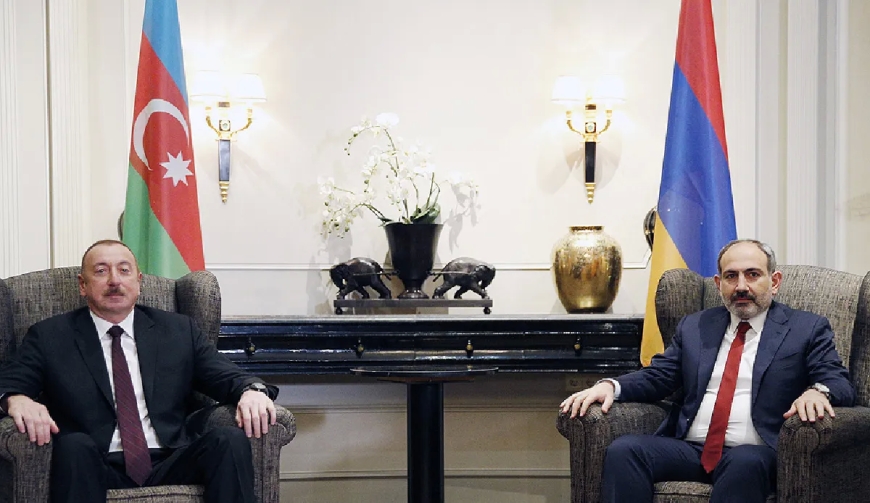
The European Union and the United States have welcomed Armenia and Azerbaijan's announcement that they will trade prisoners of war and endeavor to normalize their relations. The dispute between the two nations has lasted for decades over Nagorno-Karabakh, which Azerbaijan recovered in September following a swift attack against Armenian separatists. The two parties claimed they intended to sign a peace treaty by the end of the year and that they had decided to take advantage of "a historical chance to achieve a long-awaited peace in the region" in a joint statement that was released late on Thursday night."The two nations reaffirm their goal to establish peace and normalize relations based on respect for territorial integrity and sovereignty," the statement continued.


The three decades of ethnic Armenian control over Nagorno-Karabakh were terminated by the Azerbaijani invasion in September, which also forced the majority of the region's 120,000 population to leave what is officially recognized as part of Azerbaijan. Mutual mistrust persisted as the two nations engaged in acrimonious debate on the general parameters of a peace process before Thursday's declaration.
According to the statement, agreements made during negotiations between the office of Armenian Prime Minister Nikol Pashinyan and the administration of Azerbaijan President Ilham Aliyev call for Baku to release 32 Armenian prisoners of war and Yerevan to release two Azerbaijani troops. In addition, the two nations said that they "will call on the international community to support their efforts" and "continue their discussions regarding the implementation of more confidence-building measures, effective shortly." Yerevan "responded positively to the offer of US Secretary of State Antony Blinken to organize the meeting of the foreign ministers of Armenia and Azerbaijan in Washington," according to the Foreign Ministry of Armenia.
The US hailed the declaration and the prisoner swap, while European Council President Charles Michel called the events a " breakthrough in Armenia-Azerbaijan relations." State Department spokesman Matthew Miller said in a statement that "this commitment represents an important confidence-building measure as the sides work to finalize a peace agreement and normalize relations." Armenia also consented to drop its protests against Azerbaijan hosting the international climate change conference the next year as part of the agreement. Due to Russia's veto over EU members and Azerbaijan and Armenia's rejection of each other's proposals, governments were unable to agree on an eastern European location for the 2024 climate conference.
Within the next week, the place and presidency of the meeting must be decided. According to the joint statement, "By withdrawing its candidacy, the Republic of Armenia supports the bid of the Republic of Azerbaijan to host the 29th Session of the Conference of Parties [COP29] to the UN Framework Convention on Climate Change." The process of normalization discussions between Aliyev and Pashinyan, mediated by the EU, has been on hold for the past two months due to two rounds of conversations not proceeding. On November 20, negotiations between Armenia and the US were scheduled, but Azerbaijan declined to attend due to what it considered to be Washington's "biased" stance. When Aliyev refused to travel to Spain for another round of talks with Pashinyan in October, he again accused France of being biased. Michel was supposed to be accompanied as a mediator during those negotiations by German Chancellor Olaf Scholz and French President Emmanuel Macron.