






















According to the Global Trade Resilience Index 2023, the United Arab Emirates is the leader among Arab nations


With more than a decade of expertise in trade and sustainability, Whiteshield proudly unveiled its inaugural Global Trade Resilience Index (GTRI 2023) on December 7 during COP28. The launch event attracted esteemed government officials, influential figures from international and regional bodies, distinguished academics, and prominent voices from the private sector.


Addressing the escalating discussions on global trade policy issues and their role in supporting the shift towards greener economies, Whiteshield has introduced an innovative approach to depict the current state of trade relationships, categorized by product and partner.
Whiteshield has devised a unique methodology to assess countries' ability to absorb trade shocks in the short term and recover in the medium term. Their objective is to aid countries in achieving their sustainable development goals by pinpointing areas for improvement across their 58 GTRI indicators, encompassing 136 economies.
The top 10 GTRI performers feature nine high-income countries (Germany 1st, Netherlands 2nd, USA 3rd, France 4th, Japan 5th, UK 6th, Italy 7th, Singapore 8th, Belgium 10th) and one upper-middle-income country (China 9th). Other upper-middle-income nations ranking high include Malaysia (20th) and Thailand (22nd).
Germany, the world's third-largest exporter, secures the top spot in the GTRI rankings due to its robust trade networks globally, diversified trade in terms of products and partners, and a history of strong economic ties. The Netherlands, the sixth-largest trading nation globally, claims the second position owing to its strong connections to Europe and the world, advanced logistics, business-friendly environment, and efficient distribution systems.
The United States, the second-largest trading nation globally, secures the third position in the GTRI, reflecting its robust global trade network, significant role as a global trading hub, and diverse and complex range of traded goods. China, despite being the world's top exporting country and a major player in global supply chains, ranks ninth in the GTRI. This ranking is attributed to its strong shock-absorbing capacity and diversified portfolio of goods and trading partners, coupled with relative weaknesses in its institutional pillar.
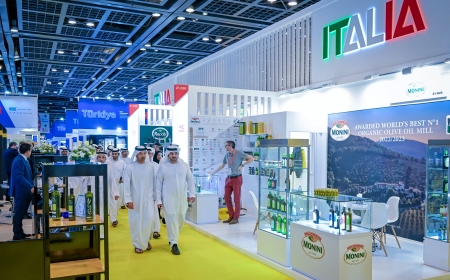
The United Arab Emirates (UAE) stands out as the leading performer among Arab countries and holds the 31st position globally, attributed to its crucial role as a major global trading hub. The UAE's business-friendly environment, diverse trade partners, world-class infrastructure, and exceptional logistics and customs capacity contribute to its high ranking. While excelling in these areas, there are opportunities for improvement, such as enhancing product diversification and advancing toward trading in more complex products.
The Kingdom of Saudi Arabia secures the third position among Arab countries and ranks 47th globally, benefiting from accelerated economic diversification plans and supportive policies. Notable improvements in the business environment, coupled with substantial growth rates in travel, tourism, logistics, and fintech sectors, have resulted from institutional, financial, and regulatory reforms. The Kingdom has successfully expanded its trading partners beyond traditional markets, but there is room for further improvement in fully realizing its trade diversification potential in goods. Areas for enhancement include streamlining border measures and reinforcing legal protection.
Fadi Farra, Senior Managing Partner at Whiteshield, remarked, “Amidst the growing discourse on global trade policy issues and their role in advancing green economies, Whiteshield introduces the Global Trade Resilience Index 2023. This index offers a novel approach to assist countries in identifying areas for improvement in both absorptive and recovery capacities to trade shocks. Our objective is to contribute to the success of COP28, particularly in areas where trade and complementary policies can drive climate and sustainable development actions.”