
























'Unsustainable' UK use is placing 'enormous strain' on the world's forests, lawmakers warn.
The country's consumption intensity, as determined by its footprint per tonne of product consumed, is higher than China's, according to a committee of MPs, and this should "serve as a wake-up call to the government".

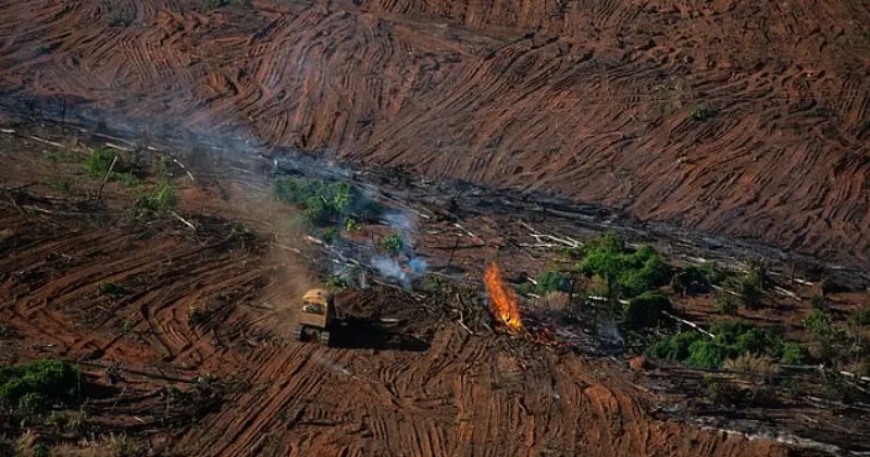
The UK's voracious appetite for commodities such as soy, cocoa, palm oil, beef, and leather is exerting "enormous pressure" on the world's forests, endangering these vital ecosystems, according to a report by the Environmental Audit Committee (EAC). The report reveals that the country's consumption footprint per tonne of product exceeds that of China, sounding an alarm about the "unsustainable impact on the planet."


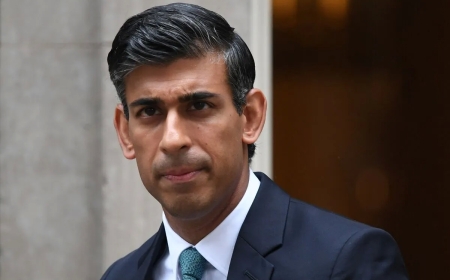
EAC chair Philip Dunne stressed that this revelation should be a "wake-up call to the government." The committee released a comprehensive 66-page report addressing Britain's role in combating global deforestation, proposing a series of recommendations.
The report follows the government's announcement that certain commodities, including cattle products (excluding dairy), cocoa, palm oil, and soy, must be certified as "sustainable" to be sold in UK markets. However, the EAC expressed concern about the phased approach and lack of a clear timeline, emphasizing the urgency required to address deforestation.
The report urged the government to expand the scope of the legislation to include additional commodities like maize, rubber, and coffee, emphasizing the need for urgency in halting and reversing forest loss and land degradation by 2030. The committee called for a strengthened legislative framework, prohibiting businesses from trading or using commodities linked to deforestation.
Forests play a critical role, hosting 80% of the world's terrestrial biodiversity, supporting the livelihoods of 1.6 billion people, and providing essential ecosystem services. Deforestation not only threatens irreplaceable biodiverse habitats but also contributes to 11% of global carbon emissions.
The EAC recommended the creation of a global footprint indicator to transparently display the UK's deforestation impact and the establishment of a target to reduce it. Concerns were raised about planned investments in nature and climate programs, including the £1.5 billion earmarked for deforestation. The committee called for greater clarity from ministers on these investments.
NGO Global Witness's Alexandria Reid emphasized that the UK will not achieve its net-zero goals if British banks continue to profit from deforestation overseas. She urged immediate action to meet the global deadline to halt and reverse deforestation by 2030.
Friends of the Earth's Clare Oxborrow supported the EAC's concerns, particularly highlighting flaws in the government's deforestation plans, including the exclusion of certain high-risk commodities and the narrow focus on illegal logging, which is notoriously challenging to determine.