

























A politician from Thailand was given a six-year term for disparaging the monarchy

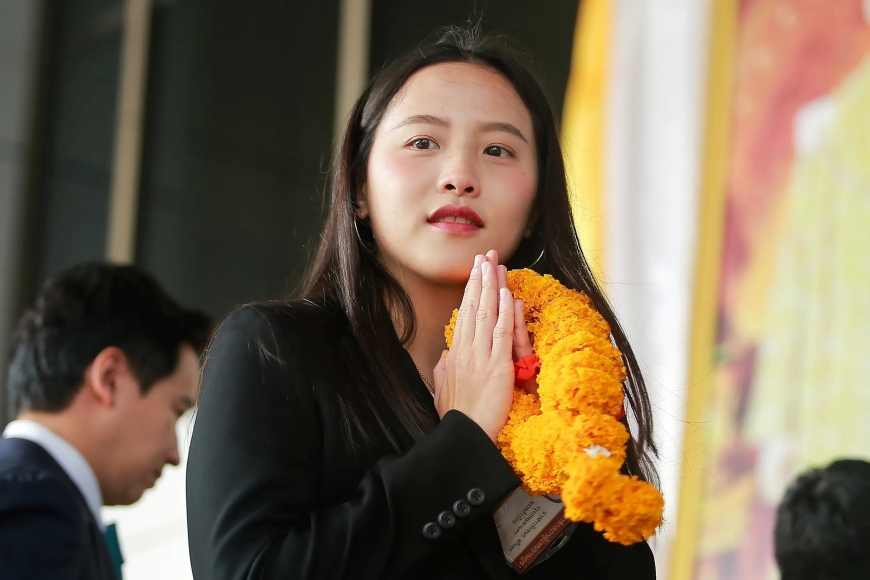
According to Thai Lawyers for Human Rights, an advocacy group, a progressive Thai legislator was sentenced to six years in jail on Wednesday for allegedly insulting the monarchy and other related offenses over two social media posts.


Thailand's Criminal Court ruled that 29-year-old legislator Rukchanok Srinok of the opposition Move Forward Party had violated the Computer Crimes Act and committed lese majeste for two tweets he made on the social media platform X in 2020. Talking about the royal family is dangerous since Thailand has some of the strongest lese majeste laws in the world. Criticizing the King, Queen, or heir apparent may result in a maximum 15-year jail sentence for each crime. In recent years, hundreds of individuals have been tried under Article 112 of Thailand's Criminal Code, with sentences that can last decades.
According to TLHR, one article criticized the government's purchase of the COVID-19 vaccine, citing a pharmaceutical business with ties to the king. Another, according to TLHR, which is keeping an eye on her case, was a repost of a picture from a 2020 demonstration that had statements the court determined to be anti-monarchy. According to TLHR, Rukchanok, also referred to as "Ice," was given bail while she challenged the verdict. She said on her Facebook page that she was back at work in parliament and that she would "like to be the voice for all 112 defendants to be granted bail" after attending the court.
Before going into politics in 2023, Rukchanok gained notoriety as an activist and vocal opponent of Prayut Chan-o-cha's previous administration, which was overthrown in a coup in 2014. Despite receiving the most votes in the May election, her party Move Forward was unable to form a government in Thailand due to opposition from the country's influential conservative establishment on its proposal to amend the lese majeste laws.
Young people have been at the forefront of popular movements in recent years for significant reforms to Thailand's political system. In 2020, youth-led demonstrations broke out all around Thailand, calling for democratic and constitutional changes that would limit the military's dominance in politics and give the royal monarchy more authority. Since those protests, the topic of royal reform and changes to lese majeste—once considered taboo—has seen a sea change, with more individuals discussing the monarchy in public and freely, despite the potential legal ramifications. Since those demonstrations, hundreds of people—including young legislators activists, and students—have been charged for lese majeste. Rukchanok is one of them.
Human rights organizations claim that since 2020, Thailand's right to free speech has been under threat. According to TLHR, at least 1,930 persons have faced political prosecution for participating in political assemblies and speaking out since the demonstrations began in July 2020; 216 of the cases were minors. The organization further stated that at that period, at least 259 persons had been accused of lese majeste.
Renowned Thai attorney and activist Arnon Nampa was found guilty of lese majeste in September 2020 for a speech he gave. Nampa was given a four-year jail term. During the demonstrations, Nampa was among the first campaigners to openly demand monarchy reform. Human Rights Watch's Asia director, Elaine Pearson, said in a statement that "the prosecution of an opposition member of parliament for two tweets is not only an appalling violation of free expression, but sends a chilling message to other outspoken opposition party members to keep silent."
"This sentence should be overturned, and the Thai government should stop pursuing cases under the lese majeste law." Lese majeste and other laws, such as the Computer Crimes Act and Sedition, have been used as political tools to stifle opponents of the Thai government, according to human rights organizations and proponents of free speech for years. Lese majeste accusations may be made on behalf of the King by anybody, even the government and common people who are not directly engaged in the issue. One guy who was charged with breaking the law in the past was accused of posting a satirical photo of his beloved dog on Facebook and "liking" a page that was thought to be offensive to the late King Bhumibol. In 2021, a Thai lady admitted to distributing audio snippets on Facebook and YouTube that were considered derogatory of the royal family. She was sentenced to 43 years in prison, which is thought to be the worst jail term ever.